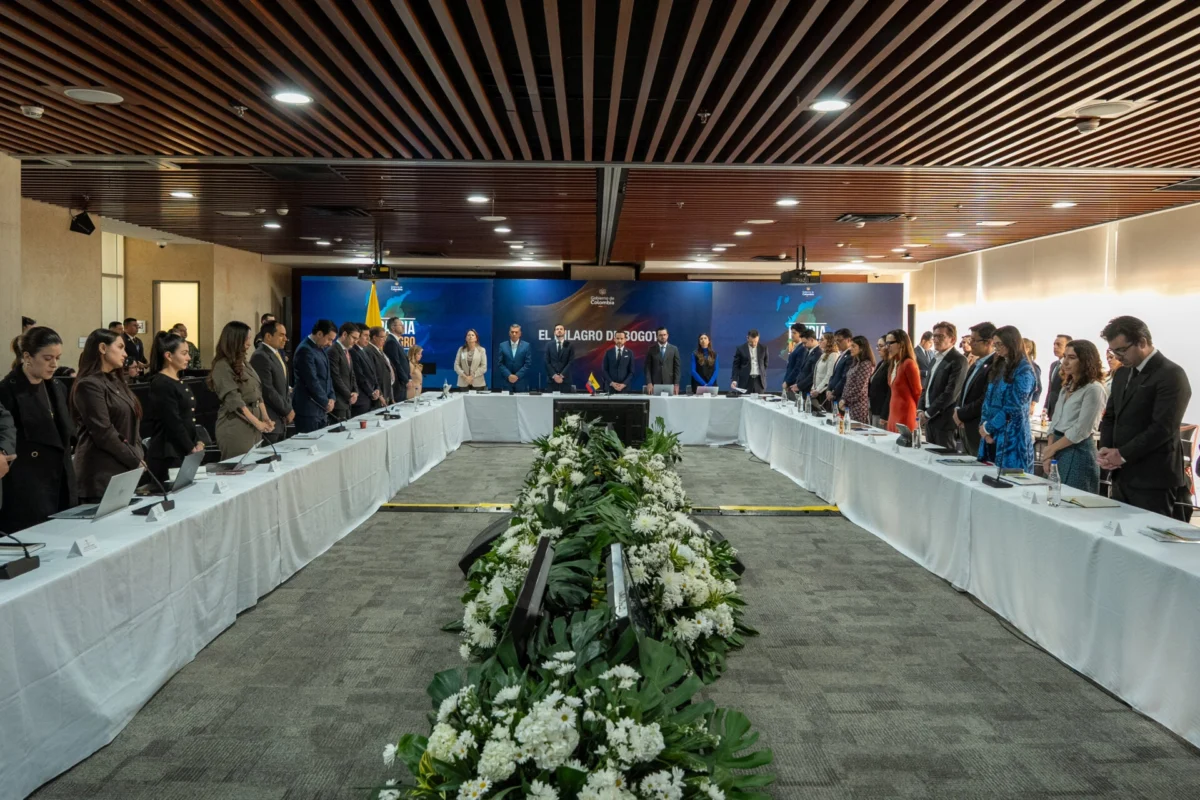
BOGOTÁ — In a major development for the capital’s mass transit and urban infrastructure, the national government has committed fresh financial backing for Bogotá’s expanding mobility network. President Abelardo de la Espriella announced that executive directives have been issued to fund the studies and preliminary designs for Line 4 of the Bogotá Metro utilizing resources from the National Infrastructure Development Fund (Fondo Nacional para el Desarrollo de la Infraestructura, Fondes).
Alongside the metro announcement, the administration confirmed that it will actively seek capital to co-finance a new fleet of electric buses for the city’s integrated public transit system. The move underscores a broader collaborative agenda between the national government and the local district administration, aimed at resolving historical bottlenecks in mass transit, energy security, public health, and environmental conservation.
During a comprehensive policy address, President De la Espriella sought to quell ongoing public and political anxiety regarding the execution of national funding allocations. He firmly rejected assertions that the central government is scaling back its financial commitment to the city’s flagship transportation projects, insisting that recent adjustments to capital disbursement schedules reflect operational realities rather than fiscal contraction.
Main Facts
The recent policy announcements encompass a multi-billion-peso package targeting Bogotá’s most critical structural needs, ranging from intra-city rail transit and regional highways to healthcare infrastructure and ecological preservation.
- Line 4 Metro Studies: Through Fondes, the national government will directly finance the technical studies and designs required to advance Line 4 of the Bogotá Metro system.
- Corridor Suba-Cota: The administration pledged to secure $450,000 million pesos necessary to complete the financing of the vital Suba-Cota transit corridor.
- Electric Bus Fleet: The executive branch will actively seek and structure funding mechanisms to co-finance the procurement of new electric buses, supporting the modernization and decarbonization of the city’s surface transit fleet.
- First Line Northern Extension: The northern extension of the Metro’s First Line—incorporating three newly designated stations—remains an active, agreed-upon priority between the presidency and the district.
- Budget Allocations Maintained: The administration categorically denied any cuts to the First Line of the Metro or the Calle 13 arterial project, attributing disbursement modifications to timeline adjustments requested by local authorities based on physical execution rates.
Chronology of Funding Adjustments and Policy Evolution
To fully understand the current financial landscape surrounding Bogotá’s infrastructure projects, it is necessary to examine the timeline of fiscal decisions, decree modifications, and administrative agreements between the national government and local authorities over recent years.
The 2025 Budget Deferrals and Multilateral Credit
In January 2025, fiscal adjustments materialized when the national government, through administrative decrees, temporarily postponed capital disbursements totaling $770,000 million pesos originally earmarked for the First Line of the Metro. This sudden shift in national cash-flow pacing forced the District administration to seek bridge financing through loans with multilateral banking institutions. This maneuver guaranteed that physical construction on the metro system would not grind to a halt while local officials engaged in protracted negotiations with central fiscal planners.
The October 2025 Re-programming Agreement
By October 2025, the central government and the District reached a formal consensus. Recognizing that physical execution schedules did not match original, overly optimistic cash-flow projections, both entities signed an addendum (otrosí) to the existing co-financing agreement. This legal mechanism systematically reprogrammed future fiscal appropriations (vigencias futuras), aligning the release of national funds with the actual pace of engineering and construction milestones on the ground.
The Calle 13 Arterial Project Restructuring
A parallel trajectory unfolded regarding the massive Calle 13 infrastructure overhaul. The project, structurally divided into six distinct operational segments, has faced standard bureaucratic and procurement hurdles. To date, only the first two segments have been formally awarded to contractors. Consequently, the District formally requested that the national government recalibrate the disbursement schedule of its co-financing contributions. Because the execution of the final four segments will naturally occur further down the timeline, holding funds idle contradicted prudent fiscal management. National authorities emphasized that these adjustments operate entirely within the legal guardrails established by the National Council for Economic and Social Policy (Conpes) documents and the foundational co-financing agreements.
Supporting Data and Financial Metrics
Despite political friction surrounding project timelines, the national government insists that its macro-level financial support for Bogotá remains robust and historically unprecedented.
+------------------------------------------+-----------------------+
| Project / Sector                         | Allocated Amount      |
+------------------------------------------+-----------------------+
| First Line of the Metro (PGN 2027)       | $19 Billion (COP)     |
| Total National Budget for Bogotá         | $9.4 Billion (COP)    |
| Suba-Cota Corridor Completion            | $450,000 Million      |
| Hospital La Victoria Equipment           | $10,845 Million       |
| Green Climate Fund (Páramos/Water)       | $146,000 Million      |
+------------------------------------------+-----------------------+
As outlined in the National General Budget (Presupuesto General de la Nación, PGN) for 2027, the administration has assigned a staggering $19 trillion pesos exclusively to the construction and advancement of the First Line of the Metro. Furthermore, overall national budget allocations directed specifically toward the capital city have risen by approximately 3%, bringing the baseline total to $9.4 trillion pesos.
Beyond rail transit, the financial data reveals targeted interventions in secondary and tertiary priorities:
- Road and Energy Infrastructure: The government fast-tracked the expansion of the Autopista Norte between streets 191 and 245, alongside the construction of the Northern Electrical Substation—a strategic asset designed to fortify the long-term energy matrix and grid reliability of Bogotá and the surrounding Sabana region.
- Social Housing Improvements: The administration initiated a comprehensive audit to review, case by case, 570 long-delayed home improvement subsidies (mejoramientos de vivienda) that have languished since 2023.
- Public Health Commitments: The national treasury will inject $10,845 million pesos to equip Hospital La Victoria, while concurrently backing the complex structural rescue of the historic Hospital San Juan de Dios and the innovation-driven "Bogotá Bio" initiative.
- Environmental Protection: Capitalizing on international climate finance, the government secured the approval of roughly $146,000 million pesos from the Green Climate Fund. These resources are explicitly dedicated to safeguarding critical high-altitude moorlands (páramos) and vital hydrological basins that sustain the drinking water supply for more than 10 million inhabitants in Bogotá and its metropolitan zone.
Official Responses and Political Reactions
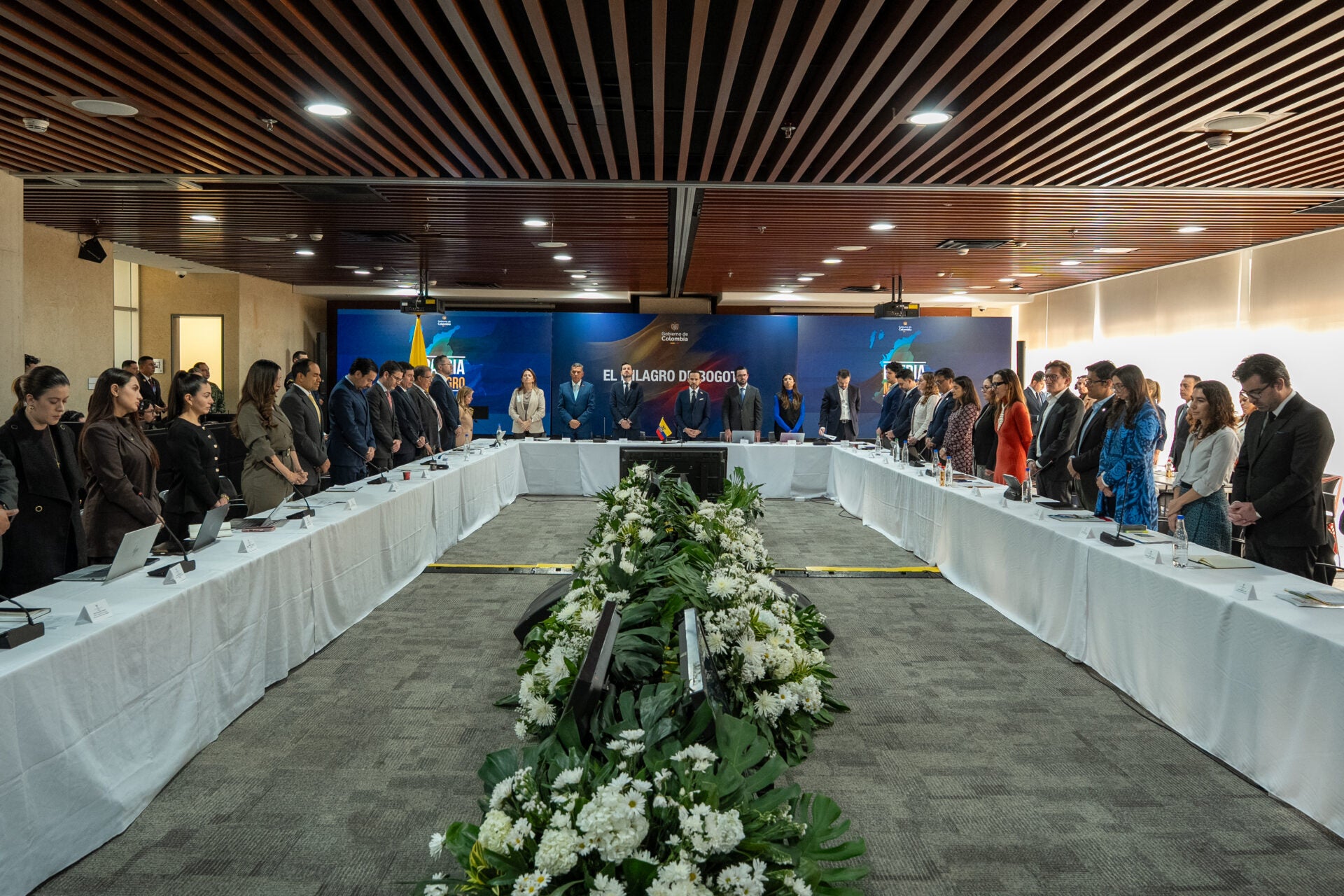
The articulation of these policies by President De la Espriella was designed to project administrative pragmatism and institutional collaboration, directly countering narratives of political estrangement between the Casa de Nariño and the Liévano Palace.
"We are not cutting investment for Bogotá; we are adjusting disbursements to match the execution schedule, which is undeniably different, and our commitment is backed by concrete resources," President De la Espriella asserted during his address. Directing his remarks toward the municipal leadership regarding the First Line’s northern expansion, he added, "Mr. Mayor, that extension of the First Line is a reality with its three new stations, and we are going to throw our full weight behind it so that this dream Bogotá needs can be realized."
Local authorities have cautiously welcomed the renewed financial guarantees, particularly the integration of Fondes resources for the nascent Line 4 studies. Urban mobility analysts have long argued that planning for subsequent metro lines must run parallel to the construction of the initial phases to prevent structural transit deficits in the 2030s.
Regarding the electric bus fleet, municipal transit operators view national co-financing as an indispensable lifeline. Bogotá operates one of the largest electric bus fleets in the Western Hemisphere outside of China, but fleet expansion and battery lifecycle replacements require capital outlays that far exceed the local district’s standalone fiscal capacity.
Implications for Bogotá’s Urban Future
The convergence of national and local funding streams for these multi-sector initiatives carries profound implications for the socio-economic trajectory of Colombia’s capital region.
1. Mobility and Spatial Integration
The institutionalization of Line 4 through formal design financing ensures that Bogotá’s rail network will evolve into a true grid rather than a collection of isolated corridors. When combined with the operational completion of the First Line, its northern extension, the modernization of the Suba-Cota corridor, and the influx of new electric buses, daily commuters can anticipate reduced travel times and lower carbon emissions. However, the true test will lie in whether executing agencies can maintain construction schedules without triggering debilitating traffic gridlocks across the city’s primary arteries.
2. Fiscal Discipline vs. Project Delivery
The ongoing friction regarding disbursement schedules—exemplified by the 2025 budgetary re-programming—highlights the delicate balance required between national macroeconomic fiscal stabilization and local infrastructure momentum. While the government insists that re-profiling funds is a standard technical procedure rooted in actual project execution rates, critics and local planners must monitor these adjustments closely to ensure that bureaucratic delays do not morph into permanent structural bottlenecks.
3. Holistic Urban Resilience
By pairing high-profile transit mega-projects with investments in energy security (Northern Substation), public health (Hospital La Victoria and San Juan de Dios), and environmental preservation (Green Climate Fund allocations for páramos), the administration is signaling a recognition that a modern metropolis cannot thrive on transit alone. Protecting the water security of 10 million citizens is as much an infrastructure challenge as laying down steel tracks for a metro line.
In closing his address, President De la Espriella offered a realistic yet optimistic assessment of the road ahead: "We do not have all the resources we would wish for to execute everything Bogotá needs, but there is every willingness to work hand-in-hand with the mayor to achieve better conditions for the citizenry of Bogotá." As these projects transition from blueprints and fiscal decrees into physical concrete and electric fleets, the ultimate metric of success will be the tangible improvement in the quality of life for millions of urban residents.