Introduction: Main Facts
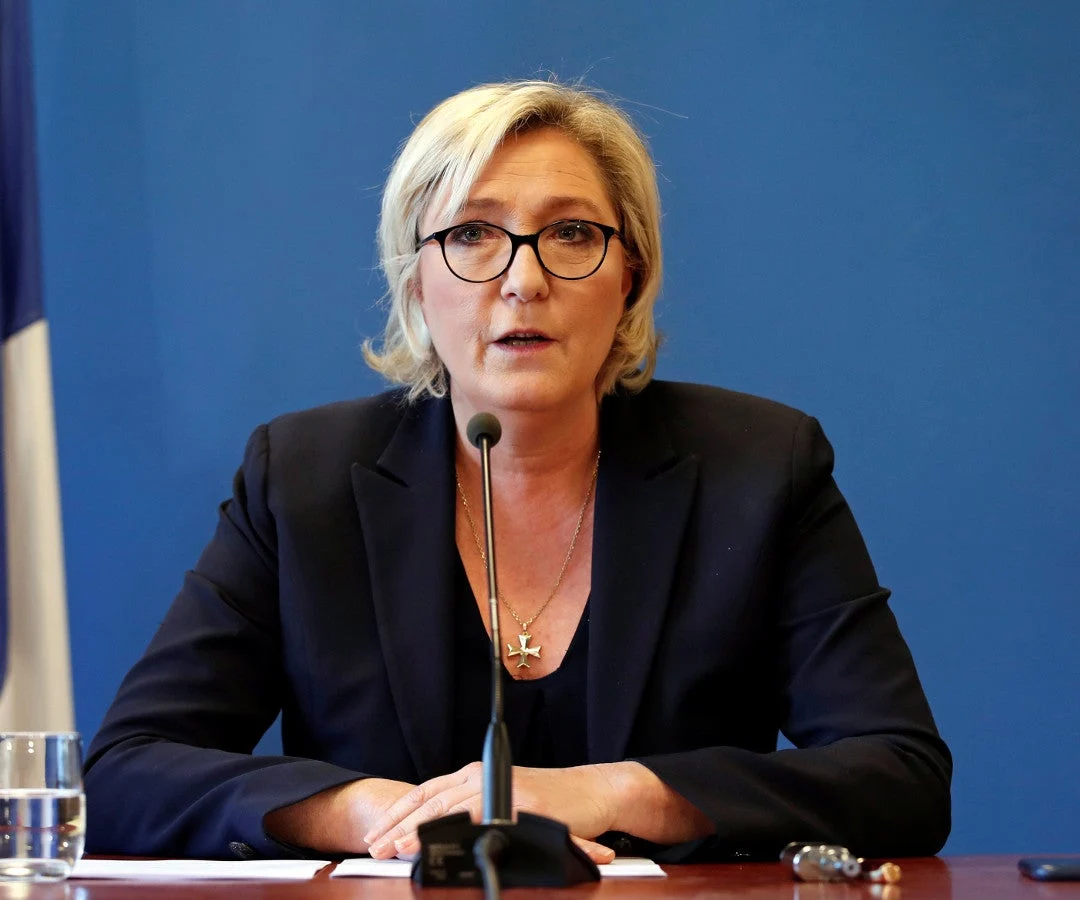
As France navigates one of the most politically, economically, and socially turbulent periods in its modern history, the landscape of the nation’s upcoming presidential election has taken a sharp turn. Marine Le Pen, the prominent leader of the French right-wing movement, officially launched her presidential campaign on Sunday, positioning herself as the definitive candidate of law, order, and national renewal. Speaking directly to a fervent crowd of supporters in the historic city of Orleans—the legendary birthplace of Joan of Arc—Le Pen capitalized on widespread public discontent, recent violent street protests, and deep-seated societal anxieties.
Her political platform, centered heavily on an uncompromising reinforcement of immigration controls, stringent law enforcement, and economic nationalism, has resonated strongly with an electorate increasingly disillusioned with traditional political parties. Recent polling data underscores this momentum, placing Le Pen comfortably at the front of the pack with over 30% of voter preferences.
This comprehensive report examines the multifaceted dimensions of Le Pen’s campaign launch, exploring the chronological buildup to her announcement, the supporting demographic and polling data, official responses from political adversaries, and the profound domestic and international implications of a potential far-right victory in the heart of the European Union.
Chronology of Events: From Street Unrest to the Campaign Trail
The Boiling Point: Weekend Unrest and Social Volatility
The weeks leading up to Marine Le Pen’s official campaign launch were characterized by intense social upheaval across France. Over the past weekend, mass protests erupted in major urban centers, ostensibly organized to voice public frustration over the soaring cost of living, rampant inflation, and widening economic inequality. However, these demonstrations rapidly devolved into chaos, characterized by widespread looting, vandalism, and violent clashes between radical groups and law enforcement agencies.
The images of burning barricades, shattered storefront windows, and police intervention served as a stark reminder of the state’s fragile social fabric. Rather than calming the populace, the unrest exacerbated public fears regarding public safety and institutional competence. It was within this climate of crisis that Le Pen and her strategists recognized a historic opportunity to frame the current political establishment as incapable of maintaining domestic order.
The Symbolic Launch in Orleans
Opting for deep historical resonance over traditional convention halls, Le Pen chose Orleans as the venue for her premier campaign speech. Orleans holds profound cultural and political significance in France, deeply tied to Joan of Arc, the 15th-century national heroine revered across the political spectrum—but particularly by nationalists—as the ultimate symbol of patriotism, resistance against foreign influence, and absolute sovereignty.
Standing before her cheering base, Le Pen struck a dramatic and defiant tone. "We are not living through the end of the world, but the end of a world—their world," she declared, casting her political opponents as relics of a failed political class. She outlined a vision of "zero tolerance," emphasizing that the primary and fundamental duty of any legitimate state is to guarantee the physical security of its citizens.
Supporting Data, Polling, and Key Campaign Pillars
The Numbers Behind the Surge
The convergence of economic hardship and public disorder has triggered a significant realignment in voter loyalty, with the French electorate increasingly abandoning traditional mainstream parties in favor of populist alternatives on both extremes of the political spectrum.
According to an opinion poll published on Sunday immediately following her speech:
- Marine Le Pen commands between 32% and 33.5% of voting intentions, solidifying her position as the definitive frontrunner for the upcoming presidential race.
- Jean-Luc Mélenchon, leader of the radical left-wing bloc, trails significantly behind as her closest rival, capturing approximately 17% of the voter preference.
- Mainstream parties (center-left and center-right formations) continue to bleed support, struggling to break into double digits as voters demand systemic change.
Furthermore, hypothetical second-round polling models project that Le Pen would decisively defeat Mélenchon—or any anticipated centrist opponent—in the runoff election scheduled for early May. This statistical dominance reflects a profound paradigm shift in French politics, where the traditional "republican front" (a coalition of voters uniting across party lines to block the far right) appears increasingly fractured and fatigued.
Core Policy Pillars: Immigration, Security, and Economy
Le Pen’s campaign platform is built upon three foundational pillars designed to appeal to a broad cross-section of working-class and middle-class voters:
- Immigration and Borders: Le Pen has pledged a hardline approach to immigration management. Her proposals include the unilateral re-establishment of permanent national border controls within the Schengen Area, the automatic expulsion of foreign nationals convicted of crimes, and a severe crackdown on transnational smuggling rings and urban drug cartels.
- Economic Strategy and Taxation: Seeking to address the cost-of-living crisis, Le Pen’s economic manifesto proposes a mixture of nationalist protectionism and targeted tax relief. She has promised to implement corporate tax reductions, slash government red tape, and channel state support into domestic industry, technological innovation, and artificial intelligence research. Notably, she has fiercely rejected any further proposals to raise the national retirement age, setting her apart from orthodox fiscal conservatives.
- National Renaissance: Framing the nation’s current struggles as a temporary trial rather than a permanent decline, Le Pen has promised a "renaissance" of French identity, promising to restore national sovereignty over European Union directives regarding trade, law, and environmental regulation.
The Legal Cloud
Despite her formidable polling numbers, Le Pen’s campaign is not without controversy. The candidate faces ongoing legal scrutiny and could potentially be forced to campaign while wearing an electronic monitoring bracelet. This stems from a recent judicial conviction regarding the alleged misuse of European Parliament funds—charges that Le Pen has vehemently denied and for which she has formally lodged an appeal. Her supporters, however, have largely dismissed the legal proceedings as politically motivated attempts by the establishment to derail her democratic mandate.
Official Responses and Political Reactions
The launch of Le Pen’s campaign and her commanding lead in the polls have elicited sharp, polarized reactions from across the French and European political spectrum.
The Radical Left: Warning of Democratic Erosion
Jean-Luc Mélenchon and the leadership of the radical left have sharply condemned Le Pen’s platform, characterizing it as a direct threat to democratic norms, social cohesion, and the rights of minorities in France. Mélenchon argued that Le Pen’s focus on law, order, and immigration is a deliberate distraction from corporate greed and systemic economic inequality. Speaking to a rally in Marseille, Mélenchon urged progressive voters to unite against what he termed "the dangerous sirens of nationalism and xenophobia," warning that a far-right presidency would isolate France internationally and inflame domestic tensions.
The Centrist Establishment: Balancing Act
The centrist government, currently grappling with the fallout from the recent nationwide protests, finds itself in a precarious position. Government spokespersons have criticized Le Pen for exploiting social unrest for political gain, accusing her of offering simplistic populist solutions to complex structural problems. Moderate politicians maintain that the administration’s ongoing reforms are vital for long-term fiscal health, even as they acknowledge the urgent necessity to restore public order and address the legitimate grievances of working citizens regarding inflation and public safety.
Implications of a Potential Le Pen Presidency
The prospect of Marine Le Pen capturing the Élysée Palace carries profound implications that extend far beyond France’s borders, rippling through the geopolitical architecture of Europe and the global economy.
Domestic Transformation
If elected, Le Pen’s administration would implement the most radical reconfiguration of French domestic policy in decades. The implementation of strict border controls and swift deportations would fundamentally alter France’s demographic and social landscape, likely triggering intense legal battles with the French Constitutional Council and European judicial bodies. Economically, her protectionist measures and resistance to EU fiscal orthodoxy could set Paris on a collision course with Brussels, testing the limits of European integration.
Geopolitical and European Union Ramifications
Within the European Union, a Le Pen presidency would represent an existential challenge to the post-war European project. While Le Pen has softened her rhetoric regarding an immediate "Frexit" (leaving the EU altogether), her vision of a "Europe of nations" entails systematically dismantling supranational authority, rolling back EU law supremacy, and severely curtailing the free movement of people. Such a shift from Paris—historically one of the primary engines of European unity alongside Berlin—would paralyze EU decision-making on critical issues ranging from defense and trade to immigration policy.
Furthermore, her historically ambivalent stance toward traditional alliances, combined with a declared skepticism toward NATO command structures, could disrupt Western solidarity on the international stage, particularly concerning geopolitical stability and security partnerships.
Conclusion
As France marches toward the pivotal election months ahead, Marine Le Pen stands at the precipice of political history. Driven by widespread public anger, ongoing social unrest, and a disciplined populist strategy, the leader of the right has successfully framed the national debate around security, sovereignty, and identity. Whether the mainstream political establishment can mount an effective counter-narrative—or whether France is indeed on the verge of entering a radical new political era—remains the defining question of contemporary European politics.