By Edwin Caicedo Environment and Health Journalist Updated: September 7, 2026
Main Facts: The Physics and Chemistry Behind the Beer Batter
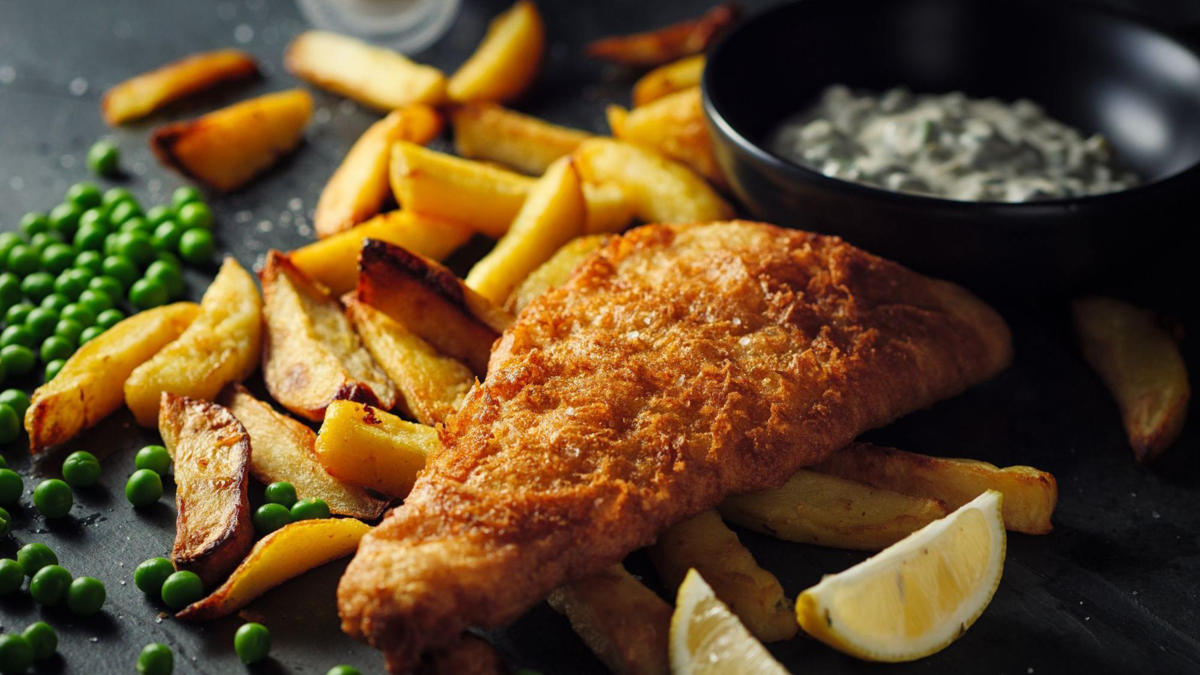
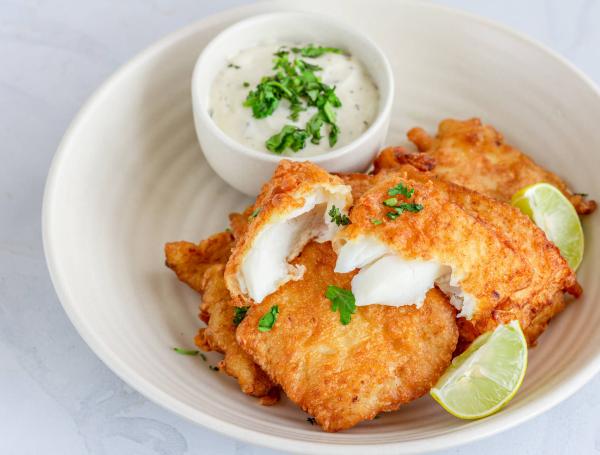
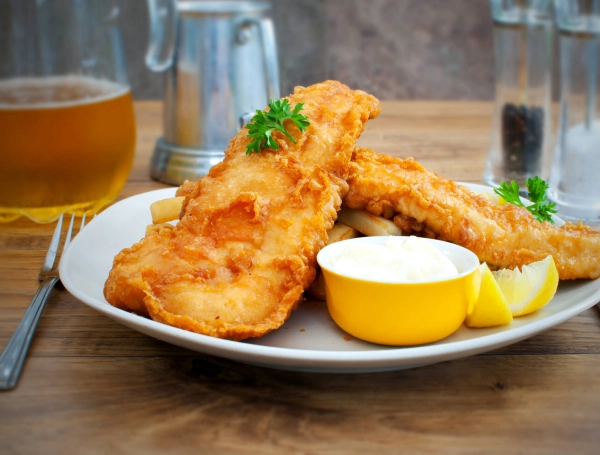
For anyone striving to achieve the ultimate fried fish—one characterized by a shatteringly crisp, lace-like golden exterior rather than a heavy, grease-logged coating—the secret weapon might already be sitting in the refrigerator. Far from being merely an old wives’ tale or a piece of rustic kitchen lore, culinary science has definitively proven that substituting a portion of the water and flour in a batter with beer yields a measurably superior texture.
According to insights published in Scientific American, the magic lies in a dynamic trio of components inherent to the beverage: carbon dioxide, foaming agents, and alcohol. When a beer-based batter makes contact with hot frying oil, a dramatic physical and chemical reaction takes place. The solubility of the dissolved carbon dioxide drops sharply, causing micro-bubbles to rapidly expand and escape. This gaseous propulsion acts as a natural leavening agent, blowing microscopic pockets throughout the coating to create an exceptionally light, delicate, and airy crunch.
Beyond mere bubbles, laboratory testing from renowned culinary institutions reveals a complex biochemical interplay. Organizations like America’s Test Kitchen and platforms specializing in precision cooking like ChefSteps have analyzed the exact mechanisms that elevate a standard batter into a masterclass of texture. While home cooks have long relied on this method for classic dishes like British fish and chips or local fried seafood specialties, modern food science has finally decoded the exact reasons why it works.
Chronology: From Tavern Tradition to Precision Food Science
The practice of incorporating fermented or carbonated beverages into batters did not emerge from a sterile laboratory; rather, its history spans centuries of trial and error in domestic and commercial kitchens alike.
Pre-20th Century (Empirical Beginnings): Traditional cooks across Europe, particularly in regions famous for brewing, discovered independently that adding ale or beer to pancake batters, tempuras, and fish coatings resulted in a superior, lighter product. This was pure empiricism: cooks observed the results and repeated the practice without understanding the underlying thermodynamics.
Late 20th Century (The Rise of Food Science): As culinary arts began intersecting with formal chemistry and physics, food writers and early culinary scientists started examining traditional techniques. The observation that carbonated liquids introduced aeration without relying on biological yeast or chemical baking powder became a focal point of experimental cooking.
The 2000s (Controlled Kitchen Testing): Culinary testing facilities, most notably America’s Test Kitchen, began conducting rigorous comparative experiments. By frying batches of fish using batters formulated with regular beer, non-alcoholic beer, club soda, and plain tap water, researchers isolated variables to see whether the alcohol or the carbonation was doing the heavy lifting.
Present Day (Consensus on Precision Gastronomy): Modern platforms like ChefSteps and publications like Scientific American have consolidated these findings. Today, the mechanics of gluten inhibition, rapid evaporation rates, and carbon dioxide solubility are standard components of modern culinary education, validating what generations of pub cooks knew instinctively.
Supporting Data: What the Experiments Reveal
To truly understand why beer transforms a standard batter, one must look closely at the data gathered by food scientists and testing laboratories. The mechanics can be broken down into three primary scientific pillars: carbonation, acidity, and evaporation.
1. The Power of Carbonation Over Alcohol
A common misconception among home cooks is that the alcohol content in beer is the primary driver behind the crispiness of the crust. However, blind comparative tests conducted by America’s Test Kitchen dismantled this myth. When comparing fish fried in batters made with standard beer versus non-alcoholic beer and sparkling water, researchers noted no significant textural difference in crispiness among the carbonated options. All yielded a markedly lighter, more lace-like crust than batters mixed exclusively with flat water.
This proves that carbonation is the true protagonist. The trapped gas seeks an escape route the moment it hits the boiling oil, creating tiny vent holes and structural pockets that prevent the batter from collapsing into a dense paste.
2. Acid, Gluten, and the pH Balance
The structural integrity of a batter relies heavily on flour, specifically the proteins glutenin and gliadin, which combine to form gluten when mixed with water. While gluten is essential for giving bread its chewy structure, it is the enemy of a delicate, shattering-crisp fried coating.
Gluten forms most easily and rapidly in a neutral environment, typically within a pH range of 5 to 6. Most beers, however, possess a slightly acidic profile with a pH hovering around 4. When introduced to the flour mixture, this elevated acidity inhibits excessive gluten formation. As a result, the batter remains tender, delicate, and elastic enough to expand without turning tough or chewy.
3. The Accelerated Evaporation of Alcohol
While alcohol is not the primary driver of the bubbles, it does play a vital secondary role. Culinary physics dictates that alcohol has a significantly lower boiling point and higher volatility than water. Consequently, alcohol evaporates at a much faster rate when exposed to the intense heat of frying oil.
According to high-tech culinary platforms like ChefSteps, this rapid evaporation forces moisture out of the outer coating at an accelerated pace. This dries out the exterior crust faster, sealing it against excess oil absorption and significantly reducing the risk of overcooking the delicate fish fillet hiding underneath.
Official Responses and Culinary Expert Insights
Professional chefs, food scientists, and institutional test kitchens largely agree on the efficacy of this technique, viewing it not as a gimmick, but as an application of fundamental food science.
"When you swap out plain water for a carbonated, slightly acidic beverage like beer, you aren’t just adding flavor notes—you are fundamentally altering the physics of how the coating sets in the oil," notes a senior food technician from experimental culinary labs. "The gas expansion creates a microscopic framework that oil cannot easily penetrate, ensuring the crunch remains intact long after plating."
Furthermore, professional associations and culinary schools emphasize that while the science is sound, the technique must be executed with precision. Chefs recommend keeping the beer ice-cold before mixing. The thermal shock—the contrast between the freezing cold batter and the scorching hot oil—enhances the speed of the expansion reaction, resulting in an even crispier barrier.
Implications: Practical Applications and Home Cooking Tips
Understanding the science behind beer batter opens up a world of experimentation for both professional kitchens and home cooks. The implications extend far beyond traditional fish and chips; the same chemical and physical principles can be applied to chicken, onion rings, tempura vegetables, and even fruit desserts.
How to Apply the Technique at Home
To successfully replicate these laboratory-backed results in a domestic kitchen, specialists recommend following several key guidelines:
Keep it Cold: Always use beer straight from the refrigerator. Cold batter hitting hot oil creates a greater thermal shock, maximizing the expansion of the carbonation bubbles.
Do Not Overmix: Stir the batter gently until it just comes together. Overmixing develops unwanted gluten, overriding the acidic protection of the beer and resulting in a heavy, rubbery coating.
Choose the Right Style: While lagers and pilsners are traditional because of their clean flavor profiles and high carbonation, heavier ales or stouts can impart unique flavor notes (such as caramel or roasted malt) depending on the protein being fried.
Maintain Oil Temperature: Even the best beer batter cannot compensate for oil that is too cold. Ensure your frying medium stays consistently hot (around 375°F or 190°C) so the exterior sets instantly while the gas bubbles do their work.
Ultimately, while beer batter is no substitute for fresh ingredients and proper oil management, it bridges the gap between kitchen folklore and hard science. Generations of pub chefs were right all along: a cold beer belongs just as much in the mixing bowl as it does in the glass.
By Global Business & Consumer Trends Desk Updated March 13, 2026 Main Facts In a strategic move designed to capture the palates of younger consumers and ride the explosive global wave of cold coffee consumption,…
In the neon-drenched, hyper-competitive culinary landscape of Tokyo, where Michelin stars are often treated as the ultimate currency of success, there exists a clandestine establishment that operates entirely in the shadows. Its name is Sugalabo,…
As the festive season descends upon us, the air fills with the nostalgic scent of cinnamon, cloves, and freshly baked goods. For many, Christmas and the New Year represent a period of indulgence, often characterized…