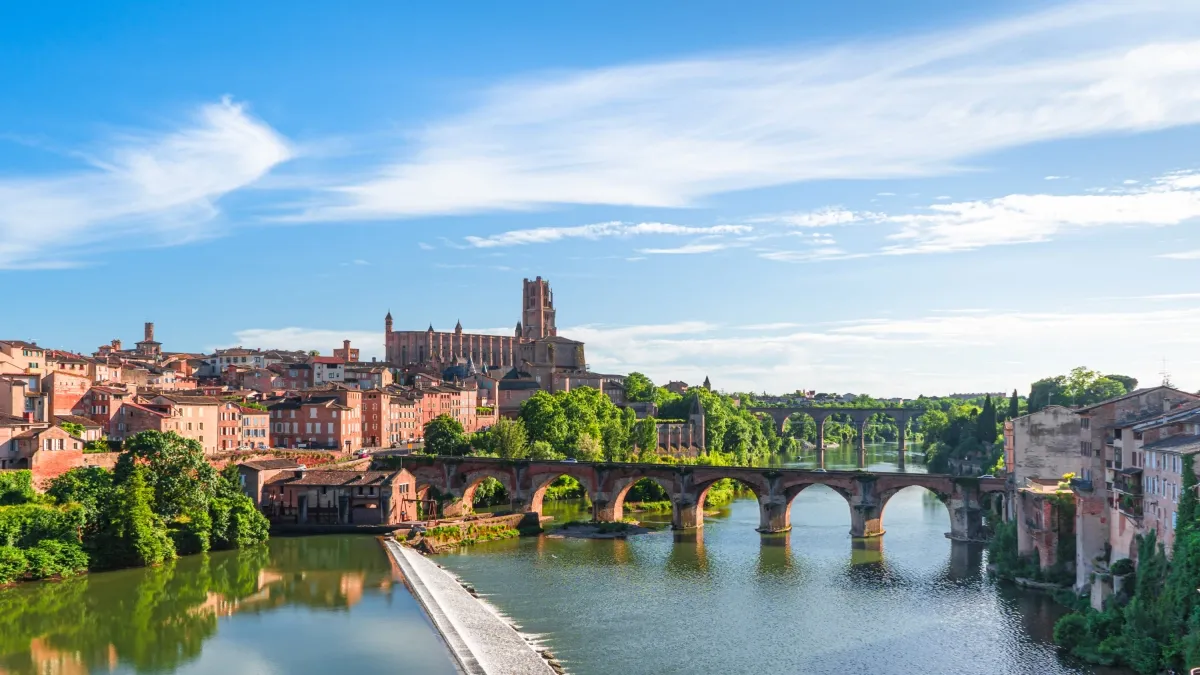
Nestled in the lush river valley of the Tarn in southern France, Albi stands as a testament to medieval grandeur, architectural ingenuity, and artistic brilliance. Though it boasts UNESCO World Heritage status—awarded in 2010—and features the largest brick cathedral in the world, this vibrant city remains a relatively hidden gem compared to the heavily trafficked tourist hotspots of the French Mediterranean and Pyrenean foothills.
Characterized by its distinct reddish-brown terracotta architecture, winding cobblestone streets, and a pace of life deeply intertwined with nature and viticulture, Albi offers an immersive journey into the heart of French history and culture. From its formidable 13th-century fortress that houses the world’s most extensive collection of works by Henri de Toulouse-Lautrec to priceless historical artifacts like the ancient Mappa Mundi, Albi is a destination that rewards the curious traveler willing to step off the beaten path.
Main Facts
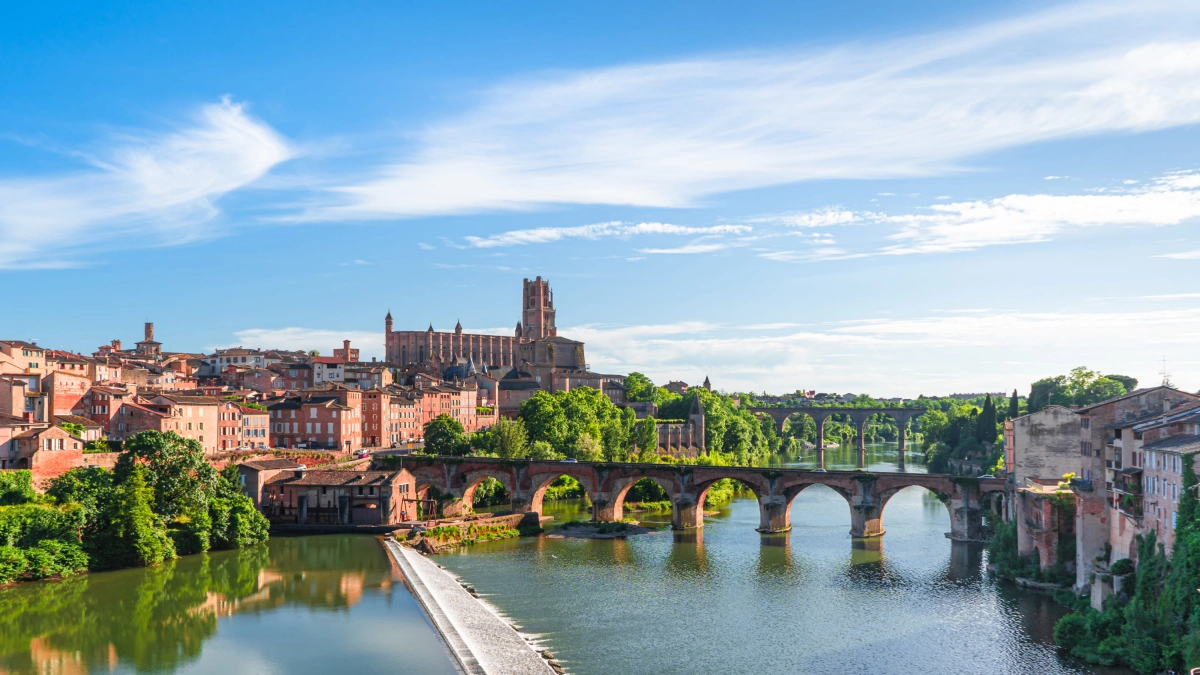
Albi’s allure lies in its compact, highly walkable historic center, where medieval and Renaissance architecture merge seamlessly against the backdrop of the Tarn River.
- Geographic Location: Situated in the Occitania region of southern France, approximately 80 kilometers northeast of Toulouse, nestled between the Pyrenees mountains and the Mediterranean Sea.
- Population: Around 50,000 residents, known as Albigois.
- UNESCO Status: Designated as a UNESCO World Heritage site in 2010, recognizing the exceptional universal value of its Episcopal City.
- Architectural Identity: Built predominantly from reddish-brown bricks manufactured from local river sediment due to a historical lack of stone quarries in the immediate vicinity.
- Key Landmarks:
- The Cathédrale Sainte-Cécile (the world’s largest brick cathedral).
- The Palais de la Berbie (a 13th-century episcopal palace housing the Toulouse-Lautrec Museum).
- The Mappa Mundi of Albi (an 8th-century manuscript and early cartographic milestone).
- Surrounding Economy: Gateway to the Gaillac wine region, featuring over 400 wine estates and independent vineyards boasting a prestigious Controlled Designation of Origin (AOC).
Chronology: A Timeline of Albi’s History
To truly understand Albi, one must trace its evolution from a strategic Gallo-Roman settlement to a medieval ecclesiastical powerhouse and, ultimately, a modern cultural sanctuary.
- 1st Century BCE – 5nd Century CE: The site develops under Roman rule, known strategically as Albiga, benefiting from its position along river trade routes.
- 12th – 13th Century: The height of the Cathar movement in southern France. Albi becomes historically associated with the Albigensian Crusade, prompting the Catholic Church to consolidate its power through monumental religious architecture.
- 1282: Construction begins on the Cathédrale Sainte-Cécile under the direction of Bernard de Castanet, Bishop of Albi, intended to assert Catholic orthodoxy and papal authority following the crusade.
- 13th Century (Mid-to-Late): Construction of the Palais de la Berbie begins. Initially designed as an imposing fortress and defensive stronghold overlooking the Tarn River, it serves to protect the local bishops.
- Late 15th – Early 16th Century: The House of Amboise, influential bishops originally from the Loire Valley, transforms the defensive Palais de la Berbie into a luxurious Renaissance residence, adding slate-roofed elements characteristic of Loire châteaux.
- 1864: Henri de Toulouse-Lautrec is born in Albi into an aristocratic, land-owning family with deep historical roots in the region.
- 1862: The Palais de la Berbie is officially classified as a French Monument Historique, ensuring its long-term structural preservation.
- 1901: Following the artist’s death in 1901, his mother, Countess Adèle de Toulouse-Lautrec, and executors negotiate to donate his vast artistic legacy to his hometown.
- 1922: The Toulouse-Lautrec Museum officially opens within the historic halls of the Palais de la Berbie, housing the world’s definitive collection of his work.
- 2010: UNESCO formally inscribes the Episcopal City of Albi onto its World Heritage list, citing its remarkably preserved medieval urban fabric and monumental brick architecture.
Supporting Data and Cultural Wealth
Albi’s compact footprint conceals a density of cultural and historical treasures that rivals much larger European metropolises.
1. Cathédrale Sainte-Cécile: The Pinnacle of Brick Gothic
Because the surrounding region lacked stone quarries, master builders of the 13th century turned to the rich clay of the Tarn River to pioneer a monumental vision in brick. Sainte-Cécile is an architectural marvel:
- Dimensions: Its imposing bell tower reaches a staggering height of 78 meters.
- Interior Artistry: The interior defies the austere exterior by housing over 18,000 square meters of deep blue Renaissance frescoes and intricate decorative painting, making it the largest painted cathedral in Europe.
2. The Mappa Mundi of Albi
Housed within the city’s archival collections, this 8th-century document is recognized as one of the world’s oldest surviving parchment maps representing the known world. Detailing lands across 25 countries, the manuscript stands as a monumental milestone in the history of human cartography and geographical perception.
3. The Palais de la Berbie and the Toulouse-Lautrec Museum
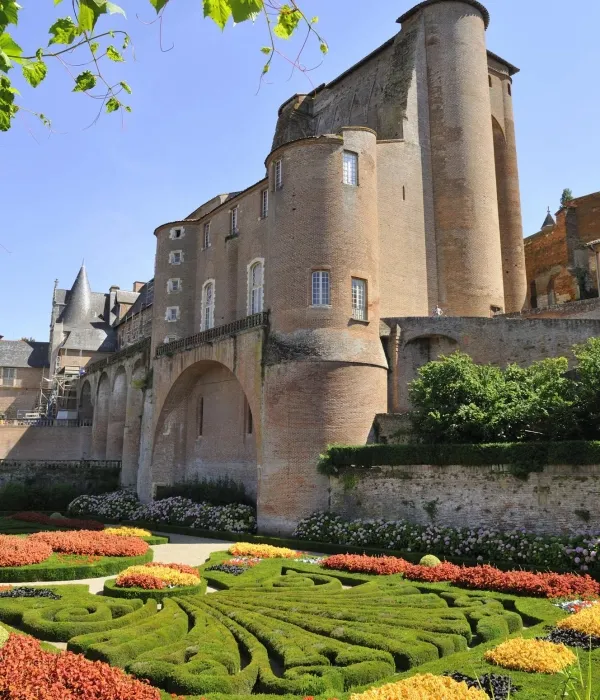
Perched high above the river, the Palais de la Berbie—older even than the famous Palace of the Popes in Avignon—serves as the stage for the world’s most comprehensive collection dedicated to Henri de Toulouse-Lautrec.
- The Collection: The museum preserves over 220 paintings, 560 drawings, and 185 lithographs.
- Chronological Scope: The exhibits span from Toulouse-Lautrec’s early youth works—depicting horses, dogs, and rural landscapes—to his iconic posters immortalizing the bohemian nightlife, cabarets, and dancers of Paris’s Belle Époque, most notably his advertisements for the Moulin Rouge.
- The Gardens: The palace grounds feature meticulously manicured French-style formal gardens with arabesque flowerbeds cascading toward the banks of the Tarn River. While the museum interior requires admission, the sprawling palace courtyards and viewing terraces are freely accessible to the public daily.
4. The Gaillac Wine Region
Just beyond the urban fringe lie the rolling vineyards of the Gaillac Appellation d’Origine Contrôlée (AOC). Cultivating vines since Roman times, this valley supports roughly 400 wine estates, producing unique white, red, and sparkling wines that pair seamlessly with the rich gastronomy of Occitania.
Official Responses and Preservation Efforts
The preservation of Albi’s distinct architectural identity and its elevation on the global tourism stage are the results of decades of coordinated municipal, national, and international governance.

Following its UNESCO inscription in 2010, the French Ministry of Culture, alongside local municipal authorities (Mairie d’Albi), established strict urban planning frameworks. These regulations ensure that new developments within and adjacent to the Episcopal City respect the historic brick palette, height restrictions, and medieval street layouts.
Local tourism boards, in partnership with Occitania regional authorities, have heavily invested in sustainable tourism infrastructure. Rather than pursuing mass tourism—which has strained other historical European destinations—Albi’s administration focuses on cultural tourism, slow travel, and pedestrianization initiatives.

"Our goal is not to turn Albi into a static museum piece, but to maintain a living, breathing city where residents and visitors coexist harmoniously," noted a local cultural heritage official. "The preservation of the Palais de la Berbie and the promotion of the Toulouse-Lautrec legacy are anchored in our commitment to environmental and structural integrity."
Furthermore, conservation scientists routinely monitor the structural health of Cathédrale Sainte-Cécile and the masonry of the Berbie Palace, using non-invasive technologies to protect the historic brickwork and centuries-old internal frescoes from environmental degradation and shifting humidity levels.

Implications for Travelers and Local Development
The growing international recognition of Albi carries profound economic, cultural, and logistical implications for both the city and the broader Occitania region.
Economic and Tourism Diversification
For years, international travelers visiting southern France have gravitated overwhelmingly toward coastal hubs like Nice, Marseille, or historic centers like Carcassonne and Avignon. Albi’s emergence as a premier cultural destination helps decentralize tourism revenue away from overcrowded coastal zones toward the interior river valleys.

The synergy between cultural sightseeing—such as exploring the Toulouse-Lautrec Museum—and enotourism (wine tasting in the Gaillac vineyards) has extended the average length of stay for visitors. Tourists are no longer treating Albi merely as a day-trip destination from Toulouse, but as an immersive multi-day stopover.
Infrastructure and Sustainable Growth
As interest grows, local authorities face the ongoing challenge of balancing modernization with historic preservation. Enhancing public transport connections, expanding pedestrian-only zones in the medieval core, and promoting eco-friendly hospitality options are central to the city’s strategic vision for the coming decade.

Ultimately, Albi offers a compelling blueprint for historic European cities: proving that it is possible to safeguard a fragile medieval heritage while offering a dynamic, modern quality of life that honors its artistic past, natural landscapes, and culinary traditions.