By Editorial Analysis
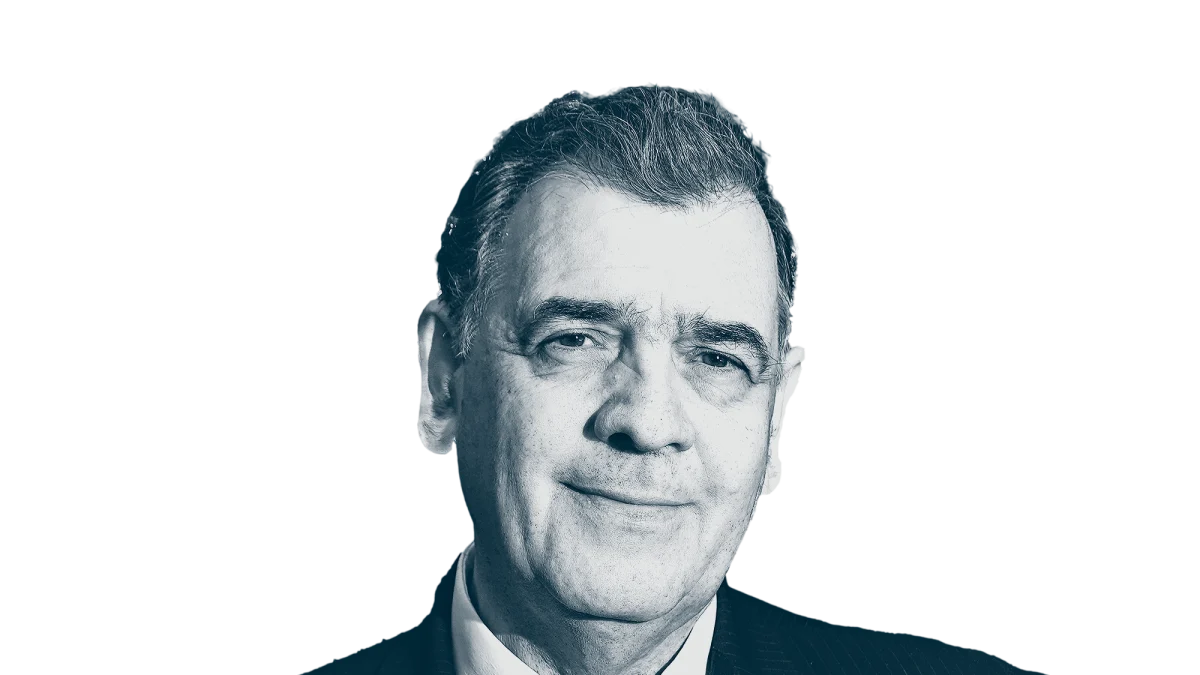
In the complex tapestry of national development, few elements are as potent—yet as fragile—as institutional and social trust. As Colombia stands at the threshold of a new governmental era, the discourse surrounding the nation’s economic and social trajectory has shifted from mere policy debate to a fundamental question of cohesion. According to industry leaders, such as the president of Drummond in Colombia, the current landscape of suspicion is not just a psychological barrier; it is an economic anchor that threatens to stall progress, dampen investment, and deepen the divide between the state, the private sector, and the citizenry.
The Cost of Disconnection: A Nation at a Standstill
The fundamental premise of any modern democracy is the belief that collective projects can yield shared prosperity. However, when a nation is defined by systemic mistrust—where the state views the private sector with skepticism, businesses fear arbitrary regulatory shifts, and citizens remain disillusioned by institutional inaction—the result is paralysis.

Decisions that should be straightforward are deferred; investment capital, which is notoriously sensitive to political volatility, seeks more predictable climates; and the most vulnerable populations are left waiting for opportunities that fail to materialize. Trust, in this context, is not an abstract virtue or a "nice-to-have" philosophical concept. It is the bedrock of economic efficiency and social stability.
The Anatomy of Suspicion
The cycle of mistrust is self-reinforcing. When businesses perceive that the rules of the game are subject to the whims of political cycles, they reduce long-term capital expenditure. Conversely, when the state perceives that the private sector is acting purely in its own interest, it imposes stricter, often more cumbersome, regulatory frameworks. This leads to a feedback loop of friction that complicates governance and stifles innovation.
Chronology of a Crisis: The Path to the Present
To understand the current urgency, one must look at the recent evolution of Colombia’s economic landscape:

- Pre-Transition Phase: A period characterized by high inflation and rising fiscal pressures, which forced the government to re-evaluate its revenue streams. During this time, the private sector expressed increasing concern over fiscal policy volatility.
- The Regulatory Squeeze: Increased scrutiny on mining, energy, and infrastructure projects, coupled with complex tax reforms, led to a period of "wait-and-see" behavior among domestic and international investors.
- The Current Transition: With the arrival of a new administration, the nation is at a pivot point. There is an emerging consensus that the old ways of confrontation—between the state and the productive sector—are no longer sustainable in a globalized, highly competitive economic environment.
- The Call for Dialogue: Recent months have seen an increase in formal and informal calls for a "New Social Contract," where the legitimacy of differences is acknowledged, but the ability to collaborate is prioritized.
Supporting Data: The Economic Imperative for Stability
The argument for rebuilding trust is supported by the cold reality of economic metrics. Colombia currently faces a dual challenge: high inflation and the necessity to maintain fiscal discipline while fostering growth.
1. Competitiveness and the OECD Benchmark
Colombia’s competitiveness rankings, when measured against OECD standards, indicate that the country is currently underperforming in key areas such as legal security and ease of doing business. If Colombia aspires to attract Foreign Direct Investment (FDI) that is not only transactional but transformative, it must offer a stable fiscal and regulatory environment that can compete with regional peers.
2. The Multiplier Effect of Local Investment
Data from regional development projects suggests that for every dollar invested by large-scale industry, the local multiplier effect is significantly higher when there is a stable relationship between the company, the local government, and the community. This includes the development of local supply chains, the professionalization of the local workforce, and the construction of social infrastructure. Without trust, these long-term projects are aborted or scaled back, leaving regions without the promised development.

Official Responses and Stakeholder Perspectives
The discourse from the leadership of major entities operating in Colombia emphasizes that "trust cannot be decreed." It is an earned commodity.
The Private Sector View
Industry representatives argue that being a "good neighbor" is no longer a corporate social responsibility slogan; it is an operational requirement. This involves:
- Active Listening: Engaging with communities before decisions are finalized.
- Transparency: Providing clear, accessible information about the impact of operations.
- Coherence: Aligning corporate actions with national development goals.
The Role of the State
From the perspective of the public sector, the goal is to provide a predictable regulatory framework. The state’s responsibility is to maintain the "rules of the game" so that they are not subject to sudden shifts that could wipe out long-term planning. There is a growing recognition that the state must act as an arbiter that facilitates rather than obstructs productive activity.

Implications for Colombia’s Future
The implications of failing to bridge the trust gap are severe. If the current cycle of suspicion continues, the following risks remain elevated:
- Capital Flight: In an interconnected global market, capital is highly mobile. Projects that face indefinite delays or excessive legal uncertainty will inevitably migrate to jurisdictions that offer more stability.
- Social Stagnation: The regions of Colombia, which have the most to gain from responsible investment, are the ones that suffer the most when large-scale projects stall. The resulting lack of employment and social services deepens the cycle of poverty and exclusion.
- Institutional Erosion: When citizens lose faith in the capacity of institutions to resolve conflicts, they turn toward populist or disruptive measures, further destabilizing the democratic process.
The Path Forward: A Tripartite Responsibility
The resolution of this crisis requires a coordinated effort from three distinct actors:
- The State: Must offer predictable, stable, and transparent regulations. It must move away from the "stop-and-start" nature of policy shifts and focus on long-term institutional continuity.
- The Private Sector: Must move beyond rhetoric. Trust is built through the fulfillment of promises—delivering on infrastructure, creating formal, high-quality jobs, and maintaining rigorous environmental and social standards.
- The Citizenry: Must participate actively and exercise control. A healthy democracy requires an informed, vigilant citizenry that demands accountability from both the state and private entities.
Conclusion: The Hard Work of Rebuilding
Colombia possesses the talent, the resources, and the history to be a regional leader. The current transition is an opportunity to redefine the relationship between the government, businesses, and society.

The sentiment expressed by industry leaders is clear: "What we need is to regain the capacity to believe in the word of the other." Trust is not a gift; it is a result. It is the byproduct of thousands of daily actions—of fulfilling contracts, of engaging in honest dialogue, and of proving, through tangible results, that working together is the only path to meaningful transformation.
In a nation that has endured decades of challenges, the greatest hurdle to its future is not a lack of resources, but a lack of belief in the possibility of a shared future. By prioritizing coherence, legal certainty, and open communication, Colombia can turn the tide, transforming its current skepticism into a renewed commitment to collective progress. The time for these conversations is now, and the results will be measured not in speeches, but in the prosperity of its people.