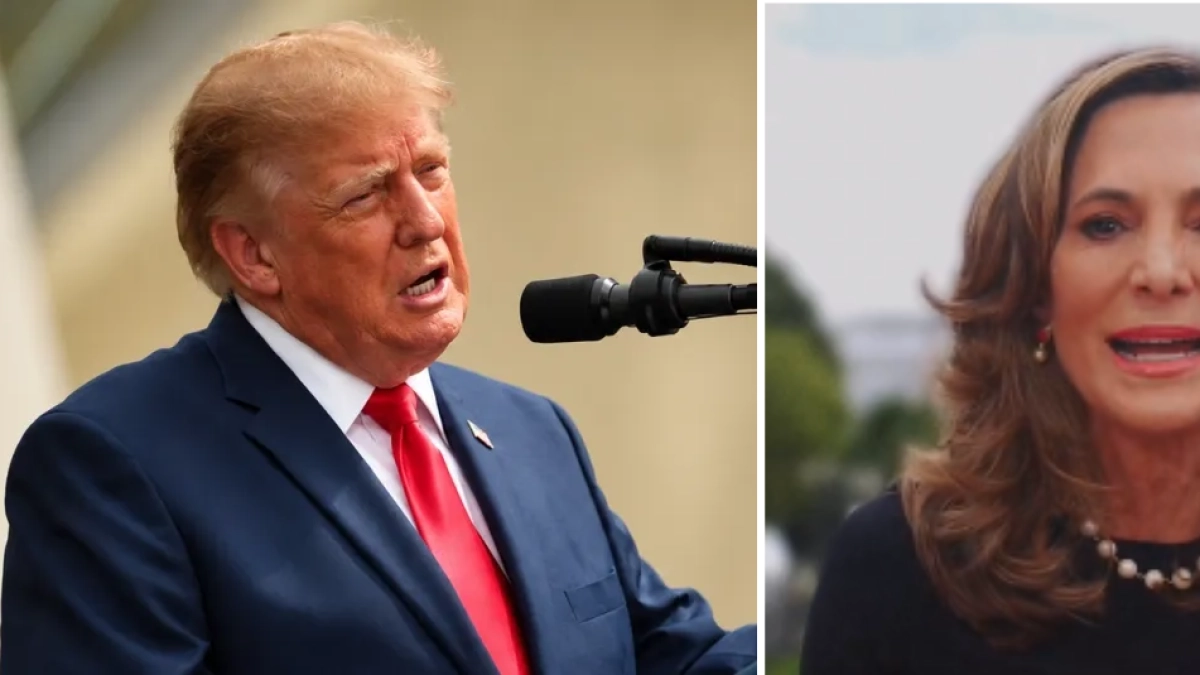
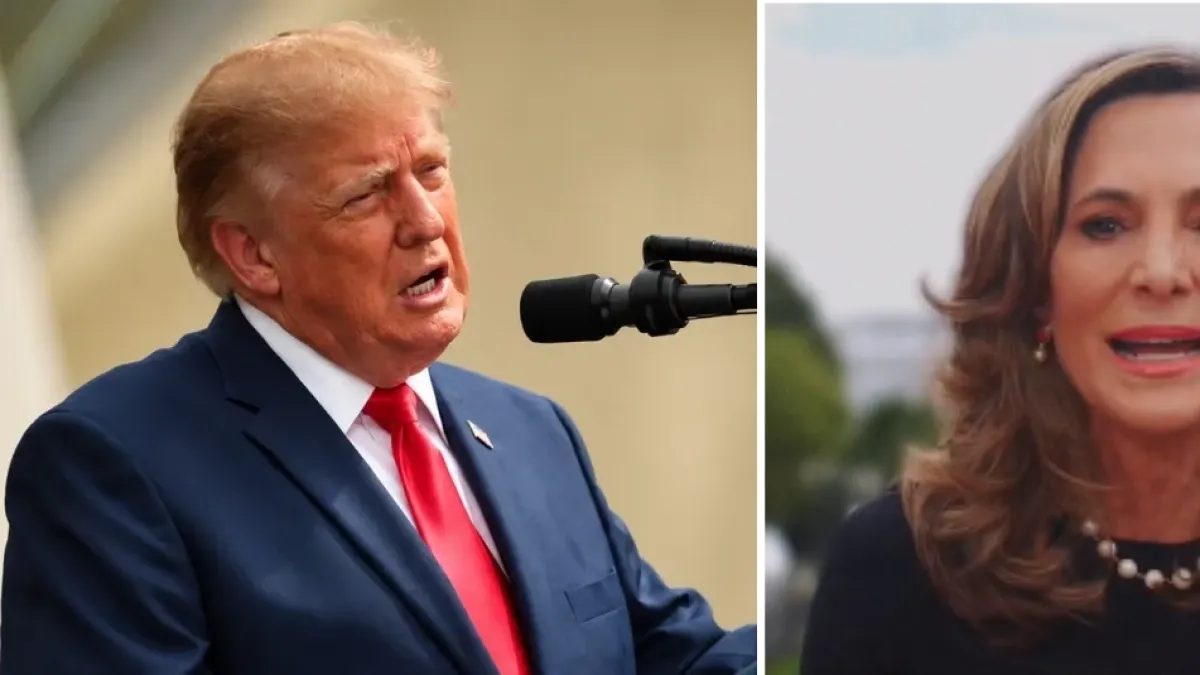
Washington D.C. — In an escalating political standoff that underscores growing fractures within the conservative coalition, U.S. Representative María Elvira Salazar has issued a direct and scathing critique of President Donald Trump’s immigration agenda. Standing outside the gates of the White House in Washington D.C., the prominent Republican congresswoman delivered a passionate video address warning that the administration’s aggressive enforcement tactics "have gone too far."
The confrontation sheds light on a brewing crisis of confidence among Hispanic voters who threw their support behind the White House during the 2024 presidential election. According to Salazar, these constituents are now feeling alienated, unrepresented, and deeply betrayed by an administration that promised economic prosperity and security, but has instead delivered a wave of fear, sweeping dragnet arrests, and unfulfilled legislative promises.
The friction between moderate and hardline factions within the Republican Party over immigration highlights the delicate balancing act facing the current administration. While base voters demand unwavering adherence to strict enforcement platforms, pragmatic lawmakers like Salazar argue that sweeping, indiscriminate policies threaten community stability, alienate vital voting blocs, and fail to address the root causes of a broken immigration system that has remained stagnant for decades.
Main Facts: The Core of the Controversy
The friction between the White House and Capitol Hill centers on the operational methods and scale of enforcement executed by Immigration and Customs Enforcement (ICE). Salazar’s public rebuke is anchored in specific statistical data and political grievances that point to a disconnect between the administration’s campaign pledges and its current governance.

At the heart of the congresswoman’s critique are the mass arrest metrics recorded by federal authorities. Salazar highlighted that during the month of July, ICE detained approximately 50,000 individuals nationwide. Most alarmingly for the lawmaker, over 50 percent of those apprehended possessed no criminal convictions or pending legal charges at the time of their arrest.
This statistical reality, Salazar argues, contradicts the administration’s repeated assertions that enforcement operations are strictly prioritizing violent offenders, national security threats, and hardened criminals. Instead, hardworking individuals with deep community ties, established employment histories, and clean records are getting caught in the crosshairs of aggressive federal sweeps.

Furthermore, Salazar emphasized the political toll these actions are taking on the Republican Party’s historic gains among Hispanic voters. She cautioned President Trump that relying on insular advisory circles that ignore the lived realities of immigrant communities could permanently fracture the broad coalition that delivered a sweeping electoral victory in 2024.
Chronology of Events: From Campaign Promises to Capitol Confrontation
To fully understand the gravity of Salazar’s recent address, it is necessary to trace the timeline of events leading up to this high-profile political collision:

- November 2024: President Donald Trump secures a decisive electoral victory, heavily bolstered by a historic surge in support from Hispanic voters across key swing states, particularly in Florida, who cited economic concerns and desires for secure borders as primary motivators.
- Early 2025: The new administration wastes no time implementing its hardline immigration platform, empowering ICE and other federal agencies to ramp up workplace raids, community enforcement actions, and expedited removal proceedings.
- Spring 2025: As enforcement metrics begin to climb, localized reports of non-criminal detentions start drawing pushback from community leaders, immigrant advocacy groups, and moderate lawmakers who anticipated a more targeted enforcement strategy.
- July 2025: ICE detains approximately 50,000 individuals in a single monthly cycle. Independent audits and congressional reviews reveal that more than half of those detained lack any criminal record, sparking immediate alarm among congressional representatives.
- September 2026: Following months of behind-the-scenes friction, Rep. María Elvira Salazar breaks ranks publicly. Recording a video statement directly in front of the White House, she issues a direct challenge to President Trump, criticizing the administration’s policies as overreaching and demanding immediate corrective action.
- Mid-September 2026: Concurrently, Salazar shifts focus to international policy during an address to the Republican Business Club of Florida, linking domestic immigration struggles with the broader geopolitical fight for a democratic Cuba, cementing her dual role as a defender of Hispanic interests at home and abroad.
Supporting Data and Enforcement Metrics
The debate over immigration enforcement in the United States is rarely short on numbers, but the metrics cited by Salazar bring a fresh sense of urgency to the legislative debate. The claim that more than half of July’s 50,000 detainees had no criminal background underscores a shift from strategic enforcement to broad-spectrum deterrence.
+--------------------------------------------------------------------------+
|                        JULY ICE DETENTION METRICS                        |
+--------------------------------------------------------------------------+
| Total Estimated Detainees                   | ~50,000                    |
| Detainees with Criminal Records / Charges | < 50%                      |
| Detainees with NO Criminal Record         | > 50%                      |
| Legislative Status                        | 4 Decades of Inaction      |
+--------------------------------------------------------------------------+
Immigration policy analysts note that when federal agencies utilize blanket sweep tactics, the collateral damage extends far beyond the individuals taken into custody. Families are fractured, local workforces experience sudden disruptions, and community trust in law enforcement agencies plummets.

Salazar pointed out that the current strategy fails to distinguish between dangerous felons and tax-paying community members who have lived peacefully in the United States for years. The absence of a legal sorting mechanism leaves enforcement agents with broad mandates that prioritize volume over public safety value.
Official Responses and Political Repercussions
The response from the White House and allied conservative lawmakers has been swift, highlighting the deep ideological divides within the Republican party. While immigration hawks within the administration maintain that strict enforcement is the only way to restore the rule of law and secure the nation’s borders, moderate and southern-state representatives find themselves caught between their loyalty to the executive branch and the outcry from their local constituencies.

Administration officials defended the ICE operations, arguing that federal law mandates the apprehension of all individuals residing in the country unlawfully, regardless of whether a separate criminal offense has been committed. From the administration’s perspective, any softening of enforcement signals weakness and undermines the broader goal of border security.
However, Salazar’s public stance has emboldened other moderate Republicans to quietly voice their concerns. Privately, several lawmakers have expressed worry that the alienation of the Hispanic electorate could carry severe consequences in upcoming midterm elections.

Salazar made it clear that her critique is not a call for amnesty or open borders—a policy position she has consistently opposed throughout her career. Instead, she is demanding a structural overhaul and a realistic legal framework. For four decades, Congress has failed to pass comprehensive immigration reform, leaving succeeding administrations to govern through executive orders, emergency declarations, and enforcement agency mandates. Salazar insists that the burden of this legislative failure now rests heavily on the Oval Agency, urging the President to pivot toward humane integration policies for the millions of long-term residents who contribute to the American economy.
Implications for the Future: Domestic Reform and International Geopolitics
The fallout from Salazar’s White House address reaches far beyond immediate immigration numbers. It touches upon the core identity of the American conservative movement and its relationship with the rapidly growing Hispanic demographic.

If the administration chooses to ignore the warnings issued by figures like Salazar, the political cost could manifest rapidly at the ballot box. Hispanic voters have proven they are not a monolith; their political allegiance is earned through tangible policy results, economic opportunity, and respect for their contributions to society. Alienating this crucial bloc through aggressive, indiscriminate deportations risks undoing years of conservative outreach and electoral gains.
At the same time, Salazar’s recent engagements abroad indicate that her political vision remains focused on broader hemispheric stability. During her appearance at a gathering convened by the Republican Business Club of Florida alongside Cuban-American business leaders, the congresswoman pivoted to the geopolitical crisis in Cuba. There, she discussed the strategic role the exile community will play in the eventual economic and social reconstruction of the island nation once the current totalitarian regime falls.

Salazar contrasted the ruinous state of modern Cuba under communist rule with the incredible success, dynamism, and entrepreneurial spirit demonstrated by Cuban exiles who found freedom and legal stability in the United States. She argued that the very immigrants and refugees who build prosperous lives under the protection of American law are the ones best equipped to spark a rebirth in their homelands—provided they are not undermined by the very nation offering them sanctuary.
As the political year unfolds, the pressure on the White House will only intensify. The collision between hardline enforcement mandates and the pragmatic realities of community integration will test the resilience of the administration’s platform. Whether President Trump chooses to recalibrate ICE policies in response to congressional warnings will help define the political landscape of the United States for years to come.