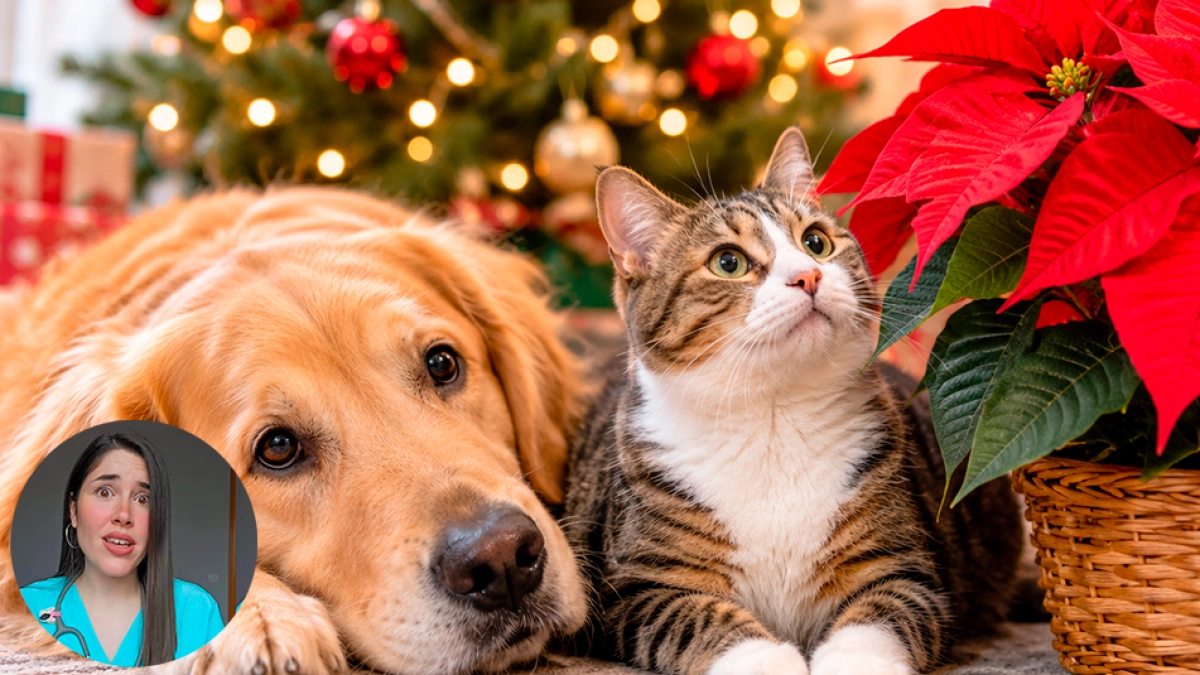
As the winter holidays approach, homes around the world undergo a festive transformation. Glowing lights, glittering ornaments, evergreen wreaths, and traditional crimson flora fill living rooms with warmth and seasonal spirit. Among these botanical holiday staples, the poinsettia (Euphorbia pulcherrima) reigns supreme. With its vibrant red and green leaves, it has become synonymous with Christmas cheer.
However, alongside the joy of the holiday season comes a recurring annual debate among pet owners: Are poinsettias dangerously toxic to cats and dogs? Every December, social media feeds fill with alarming warnings that a single nibble from a poinsettia could prove fatal to household pets. But how much truth is there to these widespread fears?
Recent clarifications from veterinary experts, including popular online voices like María Vetican, alongside authoritative bodies such as the American Society for the Prevention of Cruelty to Animals (ASPCA) and the American Kennel Club (AKC), suggest that the reality is far less terrifying than urban legends imply. While the plant is indeed irritating to animals, the narrative surrounding its lethality is largely a holiday myth.
Understanding the actual science, symptoms, and safety measures associated with poinsettias ensures that families can celebrate the holidays safely without needlessly banishing traditional decorations—or panicking if a curious cat investigates the foliage.
Main Facts: What Makes Poinsettias Irritant to Pets?
To understand how poinsettias affect domestic animals, one must look at the biology of the plant itself. The poinsettia is native to Central America, specifically southern Mexico, where it grows as a substantial shrub. In its native habitat and domestic cultivation alike, the plant produces a distinct milky-white latex sap when its stems or leaves are broken.
This sap is the core of the issue. According to toxicological assessments by the ASPCA and veterinary researchers, the sap contains specific chemical irritants: euphorbia esters and detergent-like compounds known as saponins.
When a dog or cat chews on the leaves, stems, or flowers of a poinsettia, this milky sap is released into the animal’s oral cavity. The saponins and esters act locally as chemical irritants on the soft tissues of the mouth, tongue, and esophagus. Because of this mechanism, no large quantity of the plant is required to trigger a reaction; even a small amount of sap coming into contact with mucous membranes can prompt a noticeable physiological response.
Despite frequent internet rumors claiming that poinsettias are deadly poison, major veterinary and animal poison control organizations—including the ASPCA, the Pet Poison Helpline, and the American Kennel Club—universally classify the toxicity of Euphorbia pulcherrima as mild, rather than fatal.
Chronology: The Evolution of the Poinsettia Toxicity Myth
How did a mildly irritating holiday plant develop such a terrifying reputation as a deadly household hazard? The history of the poinsettia myth offers fascinating insight into how misinformation travels across generations.
The Early 20th Century: The Tragic Misconception
The legend of the deadly poinsettia dates back to 1919. According to horticultural historians, a persistent urban legend began circulating in the United States claiming that a two-year-old child—often cited as the child of a U.S. army officer stationed in Hawaii—had died after consuming a single poinsettia leaf.
While historical records show no verifiable medical documentation backing this tragic event, the story took root in the public imagination. In an era before modern veterinary toxicology and widespread digital communication, cautionary tales about holiday plants spread rapidly through word of mouth, transforming a localized rumor into an entrenched cultural belief.
Late 20th Century: Scientific Debunking Begins
As veterinary medicine advanced through the latter half of the 20th century, researchers began systematically testing the toxicity of common household plants.
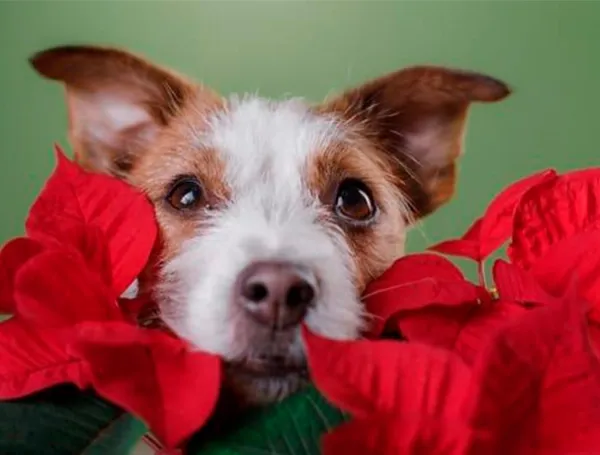
In the 1970s and 1980s, toxicologists at institutions like Ohio State University conducted formal feeding studies using poinsettia plants on laboratory animals. The results consistently contradicted the popular myth. Even when animals were fed massive quantities of poinsettia plant material—far beyond what any pet would voluntarily ingest due to the terrible taste of the sap—they did not die. Instead, they experienced temporary, mild gastrointestinal upset.
The Digital Age: Social Media and Modern Veterinary Outreach
Despite decades of scientific reassurance, the myth of the deadly poinsettia refused to die, frequently resurfacing every December via viral Facebook posts and chain messages.
In recent years, however, digital-native veterinary professionals have leveraged platforms like TikTok, Instagram, and YouTube to set the record straight. Veterinarians such as Spain’s María Vetican have utilized short-form video content to reach millions of pet owners directly. By breaking down complex toxicology into accessible, reassuring explanations, these modern veterinary communicators help bridge the gap between scientific fact and public anxiety, ensuring that owners receive accurate guidance during the stressful holiday season.
Supporting Data and Clinical Symptoms
When a pet manages to bypass household preventative measures and chew on a poinsettia, what does a clinical reaction actually look like? Because the sap acts as an irritant rather than a systemic poison, the symptoms are primarily localized to the digestive tract.

Common Signs of Poinsettia Ingestion in Dogs and Cats:
- Excessive Drooling (Ptyalism): The bitter taste and chemical irritation of the saponins in the sap frequently cause animals to salivate profusely immediately after biting into the plant.
- Vomiting: As the sap reaches the stomach lining, mild irritation can trigger the emetic reflex, leading to isolated bouts of vomiting.
- Mouth Irritation: Pets may paw at their mouths, smack their lips, or show reluctance to eat immediately following exposure due to localized discomfort on the tongue and gums.
- Diarrhea (Rare): In cases where a larger volume of plant matter has been ingested, mild intestinal upset may result in loose stool, though this is less common than vomiting or drooling.
What the Statistics Show
Data compiled by animal poison control centers indicates that poinsettia exposures account for a notable percentage of holiday-related calls, yet true medical emergencies resulting from these calls are vanishingly rare.
According to the Pet Poison Helpline, the vast majority of pets that bite into a poinsettia require zero medical intervention. The symptoms are self-limiting, meaning they resolve entirely on their own within a few hours as the animal’s digestive system processes or clears the irritant. Veterinary treatment is typically reserved only for rare cases where persistent vomiting leads to secondary dehydration, or if an animal displays extreme hypersensitivity to the plant’s chemical compounds.
Official Responses and Expert Consensus
Veterinary organizations worldwide maintain a remarkably uniform stance on the poinsettia. Far from issuing severe quarantine warnings, major institutions emphasize education and proportional responses.
The ASPCA Stance
The American Society for the Prevention of Cruelty to Animals explicitly lists Euphorbia pulcherrima in its database of toxic and non-toxic plants. However, the organization carefully contextualizes this classification:

"Poinsettias have a bad reputation for being much more toxic than they actually are. While they are considered toxic, the level of toxicity is low. The sap can cause irritation to the mouth and stomach, resulting in drooling or vomiting, but it is rarely fatal and rarely requires medical treatment."
The American Kennel Club (AKC)
Echoing the ASPCA, the AKC advises dog owners to remain calm if their canine companion investigates a holiday centerpiece. The organization stresses that while preventative management is always preferable to accidental ingestion, owners should not panic or rush to emergency clinics for mild, isolated symptoms unless the animal swallowed large amounts of non-plant material (such as plastic wrapping, fertilizer, or glass ornaments).
Independent Veterinary Insights
Veterinary professionals universally emphasize that while poinsettias are not lethal, individual animal sensitivities can vary wildly. Factors such as the pet’s body weight, age, pre-existing gastrointestinal conditions, and overall health status mean that a kitten might react more strongly to a small taste of sap than a robust, large-breed adult dog. Consequently, expert guidance consistently recommends treating the plant with respectful caution, even if the panic surrounding it is unwarranted.
Practical Implications for Pet Owners at Home
Knowing that poinsettias are only mildly toxic should bring peace of mind to pet owners, but it should not serve as an excuse to leave plants entirely unprotected. Prevention remains the cornerstone of holiday pet safety.

1. Strategic Placement is Key
The simplest way to prevent holiday veterinary visits is to keep poinsettias physically out of reach.
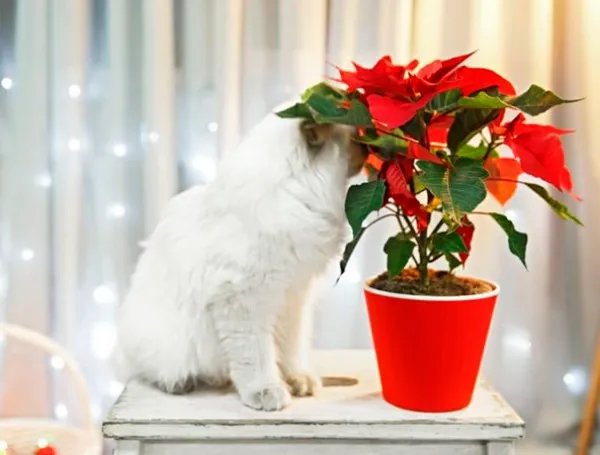
- For Cats: Because felines are exceptional climbers and agile jumpers, placing a plant on a low table, shelf, or mantelpiece is often insufficient. Cats can leap onto high surfaces with ease. Confinement to hanging baskets or rooms where pets are not permitted unsupervised is far more effective.
- For Dogs: While dogs cannot scale furniture like cats, puppies and small breeds can easily reach plants placed on low coffee tables, hearths, or directly on the floor. Elevating plants onto sturdy, high plant stands or tables can prevent curious snouts from investigating the foliage.
2. Choose Pet-Safe Alternatives
For households with particularly persistent pets—such as energetic kittens or teething puppies—the stress of constantly policing plant locations may outweigh the decorative benefits of a poinsettia. Fortunately, numerous festive plants pose zero risk to animals. Excellent alternatives include:
- Christmas Cactus (Schlumbergera): Non-toxic to both cats and dogs, featuring vibrant blooms that capture the holiday spirit.
- African Violets: Safe, colorful, and easy to maintain indoors during winter months.
- Bromeliads: Visually striking and entirely safe for curious household pets.
- Artificial Poinsettias: High-quality silk or plastic faux plants provide the exact aesthetic of the traditional holiday decoration without any biological risk.
3. Know When to Call the Vet
If you catch your cat or dog chewing on a poinsettia, take a measured, calm approach:
- Remove remaining plant material: Gently clean your pet’s mouth with a damp cloth if they tolerate it, and clear away any fallen leaves from the floor to prevent further ingestion.
- Monitor closely: Watch for signs of excessive drooling, pawing at the mouth, or vomiting.
- Contact a professional if in doubt: While most cases resolve on their own, a quick phone call to your local veterinarian or an animal poison control hotline can provide tailored peace of mind based on your pet’s specific weight and medical history. Never administer human medications or attempt to induce vomiting at home without direct veterinary instruction.
Conclusion
The holidays are a time for joy, celebration, and spending quality time with family—including the four-legged members of the household. While the traditional poinsettia has spent decades unfairly branded as a deadly botanical hazard, modern veterinary science has successfully dismantled this persistent holiday myth.

Poinsettias are indeed mildly irritating due to the chemical makeup of their milky sap, capable of causing temporary discomfort, drooling, or mild vomiting if chewed. However, they are decidedly non-fatal, and their effects typically pass quickly without clinical intervention.
By combining sensible preventative measures—such as placing plants safely out of reach—with a calm, informed understanding of true veterinary toxicology, pet owners can enjoy a festive, worry-free holiday season surrounded by both their favorite traditions and their cherished animal companions.