By Juan Pablo Penagos Ramírez Political Redaction / Analysis Published: November 4, 2026
Introduction: A Paradigm Shift in Colombian State Policy
In a decisive move that radically alters Colombia’s security and peacebuilding landscape, the government of President Abelardo De La Espriella, with the crucial backing of the legislative branch, has officially brought an end to a political doctrine that has defined the country’s internal conflict for more than three decades.
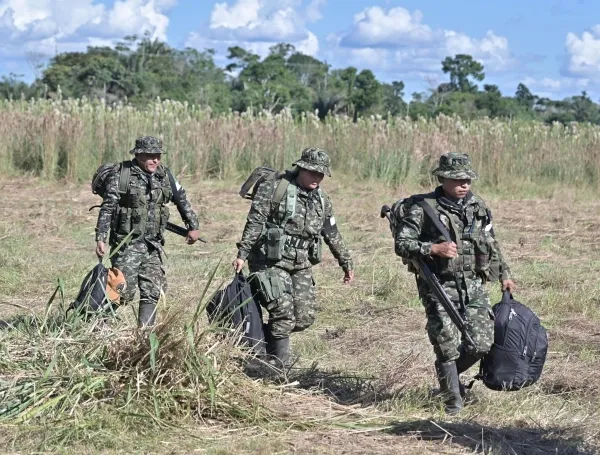
Once the newly approved submission-to-justice law is formally sanctioned by the executive, the Colombian State will cease recognizing illegal armed groups as political interlocutors. For at least the next four years, the administration’s strategy will pivot away from ideological negotiations, reducing the state’s approach to a binary choice for illegal combatants: surrender to justice under strict legal parameters in exchange for potential sentence reductions, or face the full, unyielding force of the military and police apparatus.
This legislative milestone marks the definitive burial of the "Total Peace" (Paz Total) policy pursued by the previous administration of Gustavo Petro. That framework, heavily criticized for acting as a permissive "blank check" for criminal organizations, sought simultaneous negotiations with numerous armed factions across the country.
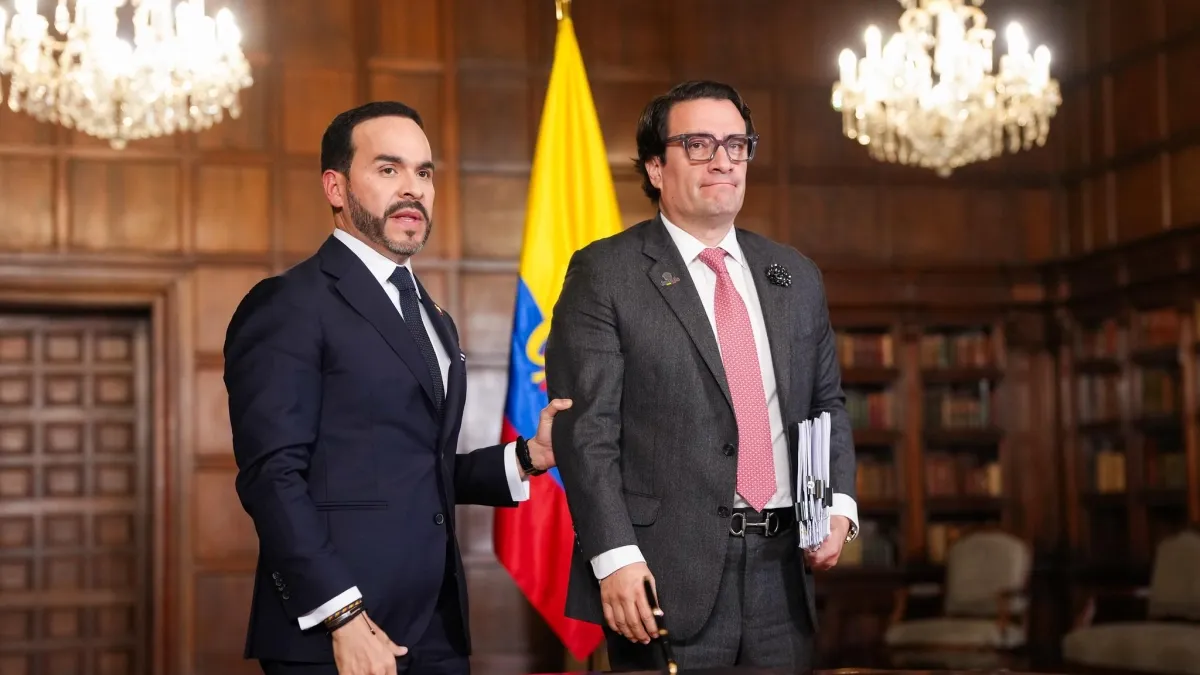
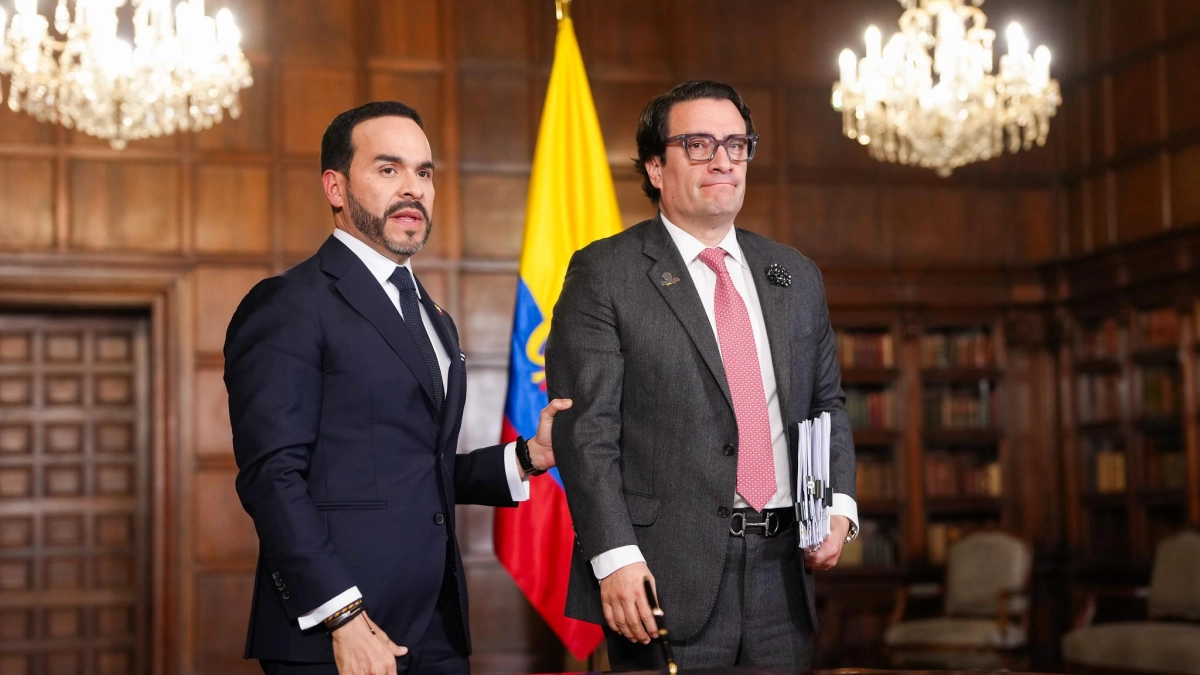
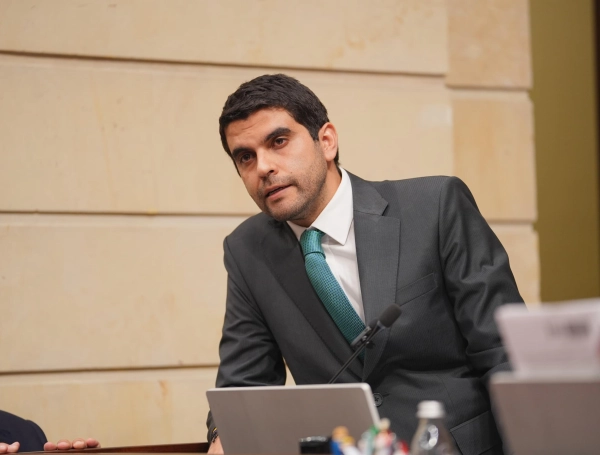
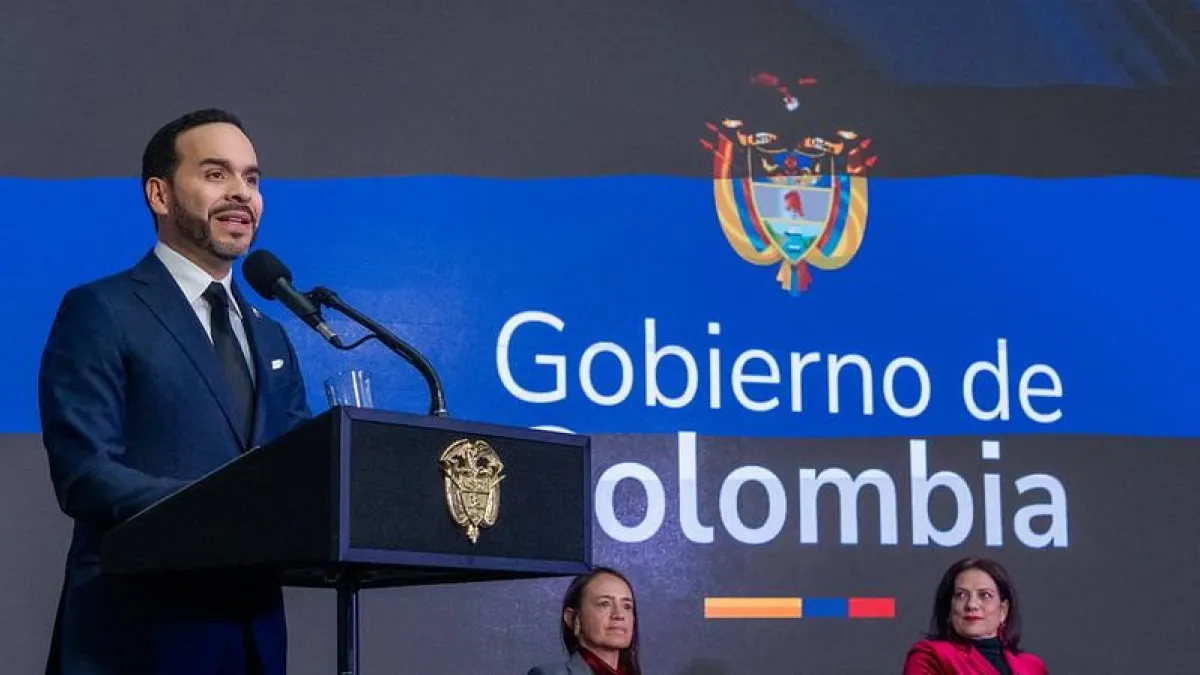
Under the De La Espriella administration—spearheaded by Minister of Justice Iván Cancino—structures such as the National Liberation Army (ELN), the FARC dissident factions, and various splinter groups will no longer receive the status of political actors. Instead, they will be treated strictly as high-impact criminal organizations (GAOs), facing the same judicial framework applied to ordinary transnational and domestic syndicates.
Chronology of a Policy Shift: From Belisario Betancur to Abelardo De La Espriella
To understand the magnitude of this legislative turn, it is necessary to examine the evolution of peace and conflict resolution in modern Colombian history:
Early 1980s (The Betancur Administration): The foundation for political negotiations with insurgent groups was laid during the government of Belisario Betancur. For the first time, the state formally opened the door to dialogue, acknowledging that guerrillas possessed political motivations rooted in socio-economic disparities.
Late 20th Century to 2016: Despite hardline periods—most notably under President Álvaro Uribe, who largely dismantled the political status of insurgent groups while maintaining tactical allowances for dialogue—subsequent administrations continued to pursue negotiated political settlements. This trajectory culminated in the historic 2016 Peace Agreement signed between Juan Manuel Santos’s government and the FARC, which cemented the institutional belief that resolving the conflict required addressing its structural, political, and social root causes.
2022–2026 (The Petro Era): The "Total Peace" initiative attempted to scale up simultaneous political negotiations with virtually every armed actor in the country. Critics argued that the lack of rigorous conditionality led to territorial expansion by criminal groups under the guise of peace talks.
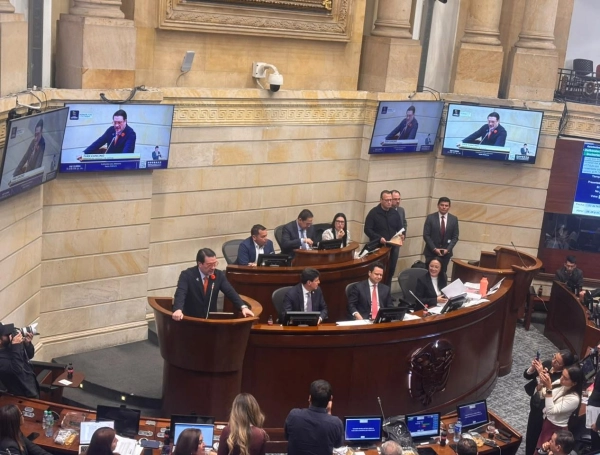
November 3, 2026 (The Legislative Turning Point): Both the Senate and the Chamber of Representatives approved an identical text for the new submission-to-justice law.
November 4, 2026: The De La Espriella administration formally celebrates the closure of the 30-year cycle of political negotiations, opening an era defined strictly by judicial submission.
Supporting Data: The Economics of Modern Violence
The structural transformation of Colombia’s internal conflict heavily influenced the timing and nature of the new law. Over the past two decades, traditional insurgency driven primarily by ideological ambitions has steadily mutated into criminal enterprises sustained by hyper-profitable illicit economies.
According to recent security and intelligence reports:
Illicit Proceeds: Contemporary armed structures rely heavily on transnational drug trafficking, large-scale illegal mining, extortion, and smuggling.
Mining Revenues: In the illegal mining sector alone, underground networks generate estimates exceeding $8 billion USD annually, providing the financial lifeblood necessary to sustain territorial control, corrupt local institutions, and purchase high-grade weaponry.
Targeted Structures: The new law immediately closes the door to political negotiations for at least six major armed organizations that previously moved fluidly between peace talks and criminal expansion. These include:
The National Liberation Army (ELN)
The Central General Staff (EMC – FARC dissident faction)
The Segunda Marquetalia
Comuneros del Sur (a regional splinter structure)
The State Mayor of Blocks and Fronts (Estado Mayor de Bloques y Frentes)
The Bolivarian Army National Coordinator (Coordinadora Nacional Ejército Bolivariano)
Official Responses and Perspectives
The legislative victory was lauded by key architects of the executive branch and congressional leadership, who emphasized that the state of law must remain absolute and indivisible.
"My gratitude and recognition to the Minister of Justice, Iván Cancino, for his extraordinary work, commitment, and dedication to pushing forward this important initiative. Thanks also to the Congress of the Republic for approving the law and contributing, through the exercise of their constitutional responsibilities, to the strengthening of justice and security in Colombia," expressed President Abelardo De La Espriella following the parallel approval in both legislative chambers.
Senate President Honorio Henríquez reinforced the administration’s primary objective: "The objective is clear: combat criminality and guarantee that the State is above the criminals."
Meanwhile, Senator and legislative rapporteur Hernán Cadavid (Democratic Center) clarified the exact legal boundaries of the new norm: "It is not a peace agreement. It is not a political negotiation. It does not suspend arrest warrants. It does not interrupt extradition processes. Conditions for submission are established without the rule of law dividing or losing its raison d’être."
Implications: Legal Transformation and Institutional Challenges
The pivot from political dialogue to judicial submission carries profound implications for the legal, security, and social frameworks of Colombia.
1. Juridical Versus Political Negotiations
As noted by Jorge Mantilla, conflict researcher and professor at Universidad del Rosario, the nature of engagement has completely transformed: "A new chapter of negotiation with armed groups is opening: it is no longer a political negotiation, but a juridical one. As submission to the law, it is still a negotiation, but of other characteristics, and where other actors—such as the Attorney General of the Nation or the Minister of Justice—will acquire primary roles and relevance."
2. Generalization of the Threat
María Victoria Llorente, director of the Ideas for Peace Foundation (FIP), points out that the legislation unifies various tiers of criminality under a single umbrella, categorizing major organized armed groups (GAOs) and smaller urban criminal networks (GDOs) with identical legal rigor: "They put everything in the same package; it is proposed that these groups are terrorists and, as such, the only exit facing the State is to submit. That is it. There is no option for the application of political offenses."
3. The Institutional Architecture Dilemma
One of the most complex challenges moving forward, according to academic analysts like Jorge Mantilla, is figuring out how to handle the administrative and community structures that were built during decades of peace talks.
The state must now design a transitional institutional framework to manage existing territorial transformation programs—such as the Development Programs with a Territorial Focus (PDET), crop substitution initiatives, and community-based rural development projects—that were historically anchored to political peace agreements rather than strict penal submission processes.
Conclusion
By ending over thirty years of precedent, the Abelardo De La Espriella administration has signaled a permanent end to the romanticized notion of insurgent politics in Colombia. By treating the ELN, dissident factions, and their various splinters as common criminals, the state seeks to restore the monopoly of force and reassert the supremacy of the legal system. Whether this purely judicial approach can permanently dismantle billion-dollar illicit economies without the cushion of regional socio-political integration remains the ultimate test for the new government’s security doctrine.
Bogotá, [Assumed Date, e.g., July 20, 2026] – President-elect Abelardo De La Espriella has embarked on a distinctive political journey, signaling a profound shift in governance philosophy by pledging to lead "with and from the…
Bogotá, Colombia – July 17, 2026 – Colombia’s newly formed government coalition faces its first significant test, even before President-elect Abelardo de la Espriella takes office. Daniel Briceño, the highest-voted congressman-elect for the Democratic Center…
BOGOTÁ — In a definitive shift toward fiscal discipline, the administration of President Abelardo De La Espriella announced a sweeping package of budget cuts exceeding 267,000 million pesos on October 31, 2026. Spearheaded by Presidential…