
As the northern hemisphere transitions deeper into the autumn season and the southern hemisphere prepares for the height of spring, the month of November 2026 offers a captivating itinerary for stargazers and professional astronomers alike. From the radiant intensity of the "Beaver Supermoon" to the subtle, icy glow of distant planets, the night sky is set to host a series of events that highlight the dynamic nature of our solar system.
Whether you are a seasoned observer equipped with high-aperture telescopes or a casual enthusiast relying on the naked eye, this month’s celestial calendar provides ample opportunity for exploration.

The Main Event: The Beaver Supermoon of November 24
The centerpiece of this month’s astronomical activity is undoubtedly the full moon occurring on November 24, colloquially known as the "Beaver Moon." This year, the event is particularly significant as it falls under the category of a "Supermoon."
Defining the Supermoon Phenomenon
A Supermoon occurs when the Moon’s full phase coincides with its perigee—the point in its elliptical orbit where it makes its closest approach to Earth. Because the orbit of the Moon is not a perfect circle, the distance between our planet and its satellite varies by roughly 30,000 miles throughout the month.

During this 2026 event, the Moon will appear approximately 14% larger and 30% brighter than a standard full moon observed at its furthest orbital point (apogee). This increase in luminosity and size provides a spectacular backdrop for night photography.
The Lunar Illusion
Astronomers and optical scientists often remind the public of the "Moon Illusion." When the Moon rises near the horizon, it often appears significantly larger than when it is high in the zenith. This is a psychological effect where the brain compares the size of the Moon to distant terrestrial objects like trees, mountains, or buildings. Observers looking to maximize the visual impact of the Beaver Supermoon are encouraged to view it shortly after moonrise or just before moonset, as the juxtaposition against the landscape creates a stunning visual scale.
Chronology of Celestial Events: November 2026
While the Supermoon captures the headlines, the rest of the month is punctuated by a series of planetary alignments and meteor showers that require careful timing.
Early November: Planetary Approaches
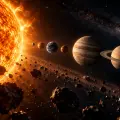
The month begins with favorable conditions for tracking our solar system’s neighbors. Early in the month, Mars and Jupiter continue their relative dance across the celestial sphere. While "conjunctions" (the apparent close passing of two bodies) are common, the visual proximity of these two distinct planets provides a study in contrast: the rusty, iron-rich hues of the Red Planet against the steady, creamy luminescence of the gas giant.

Mid-November: The Leonid Meteor Shower
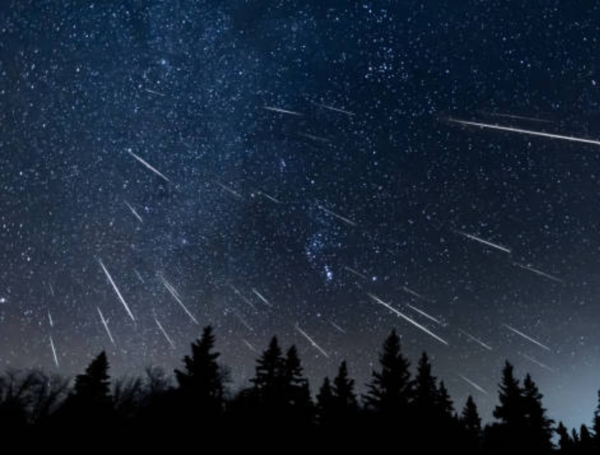
November is historically synonymous with the Leonids, a meteor shower resulting from the debris left behind by the comet Tempel-Tuttle. While peak activity varies year-to-year, the 2026 window offers observers in dark-sky locations a chance to see a steady stream of "shooting stars."
These meteors are known for their high velocity—entering the Earth’s atmosphere at approximately 71 kilometers per second (about 158,000 mph). This speed makes them prone to producing bright streaks and long-lasting trails. For optimal viewing, experts recommend finding a location far from urban light pollution during the pre-dawn hours, when the constellation Leo—the radiant point—is highest in the sky.
Late November: The Grand Finale
The conclusion of the month is dominated by the aforementioned Supermoon. However, it is also the ideal time to observe Uranus. While Uranus is technically a naked-eye object under perfect, pitch-black conditions, it is notoriously difficult to distinguish from background stars. During late November, the planet reaches an opposition-like state, making it slightly easier to identify with the aid of binoculars or a standard backyard telescope, appearing as a distinct blue-green disc.
Technical Perspectives and Supporting Data
Astronomy is as much about mathematics and orbital mechanics as it is about wonder. The events of November 2026 are governed by the precise, predictable laws of gravity that keep our solar system in its current state of equilibrium.
Orbital Mechanics: Why Now?
The timing of these events is a result of the synchronization between the Moon’s 27.3-day orbital period and the Earth’s 365-day journey around the Sun. The "Beaver Moon" label is a traditional designation, historically attributed to North American indigenous cultures who marked this time of year as the period when beavers were actively preparing for winter, constructing dams and storing food.
From a scientific standpoint, the 2026 perigee is notably close, placing the Moon roughly 357,000 kilometers from Earth. This proximity causes a measurable increase in tidal forces. While the effect on the Earth’s solid crust is minimal, coastal regions may experience "king tides"—higher-than-average high tides and lower-than-average low tides—during the days surrounding the full moon.

Instrumentation for the Amateur Astronomer
For those looking to move beyond the naked eye, the following equipment is recommended for this month’s specific events:
- For the Supermoon: A simple DSLR camera with a telephoto lens (200mm or greater) is sufficient. Use a tripod to avoid motion blur.
- For the Leonids: No equipment is needed. In fact, telescopes are discouraged as they limit your field of view; the best way to catch a meteor is to look at the widest possible expanse of the sky.
- For Uranus: A telescope with at least 50x magnification is required to resolve the planet as a disc rather than a point of light.
Scientific Implications: The Stability of the Cosmos
While these events provide a beautiful display, they also serve as a reminder of the fragility and complexity of our cosmic neighborhood. Recent scientific discussions have focused heavily on the long-term stability of the solar system.

Researchers have noted that while the orbits of the planets appear fixed and immutable on a human timescale, they are subject to "orbital chaos." Recent findings regarding the potential for orbital resonance suggest that over timescales of millions—or even billions—of years, the gravitational interplay between giant planets like Jupiter and smaller bodies could lead to significant deviations.
Though these processes are far removed from our daily lives, the observation of planets like Mars, Jupiter, and the distant, icy Uranus serves to ground our understanding of the solar system as a living, changing laboratory of physics. Every time we observe a conjunction or a lunar perigee, we are observing a snapshot of a much larger, multi-billion-year process of evolution.

Preparing for Your Observation
To ensure the best experience, observers should adhere to the following guidelines:
- Check Local Weather: Even the most spectacular astronomical event is rendered invisible by cloud cover. Consult local meteorological reports 24 hours in advance.
- Adapt Your Vision: It takes the human eye approximately 20 to 30 minutes to fully adapt to low-light conditions. Avoid looking at your smartphone or bright white lights during your observation session; use a red-light flashlight if you need to consult a map.
- Find a Horizon: Because the Moon appears larger near the horizon, look for locations with an unobstructed view of the eastern or western sky.
- Join a Community: Astronomy clubs often host "star parties" where members share high-end equipment. These are excellent environments for novices to learn how to operate telescopes and identify constellations.
Looking Ahead: The Future of Space Observation
As we approach the end of 2026, the scientific community continues to push the boundaries of how we observe the heavens. From the data harvested by deep-space probes to the advanced imaging capabilities of next-generation orbital telescopes, our window into the universe is wider than ever before.

Whether you are looking up at the Beaver Moon to reconnect with ancient human tradition or peering through a telescope to witness the silent rotation of a gas giant, November 2026 promises to be a month of profound discovery. The universe does not require an invitation to put on a show; it only requires an observer willing to look up and appreciate the mechanics of the infinite.
This report was curated with the assistance of artificial intelligence, verified by astronomical data, and reviewed by editorial staff to ensure accuracy in the reporting of celestial events for November 2026.