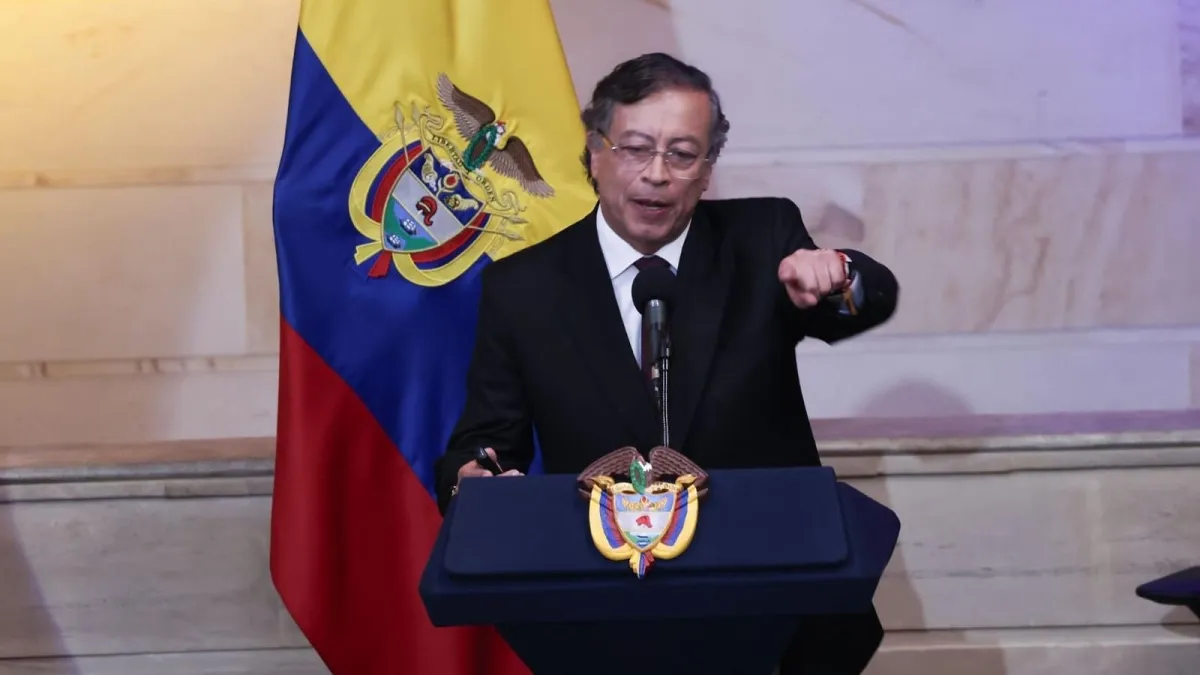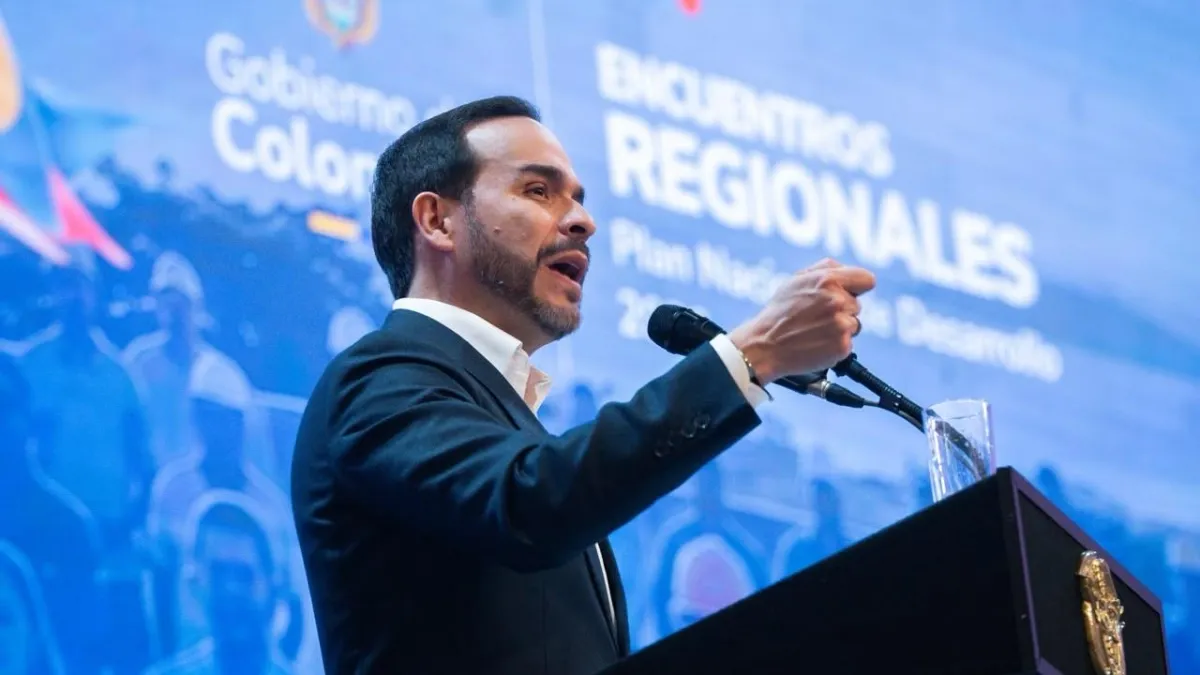
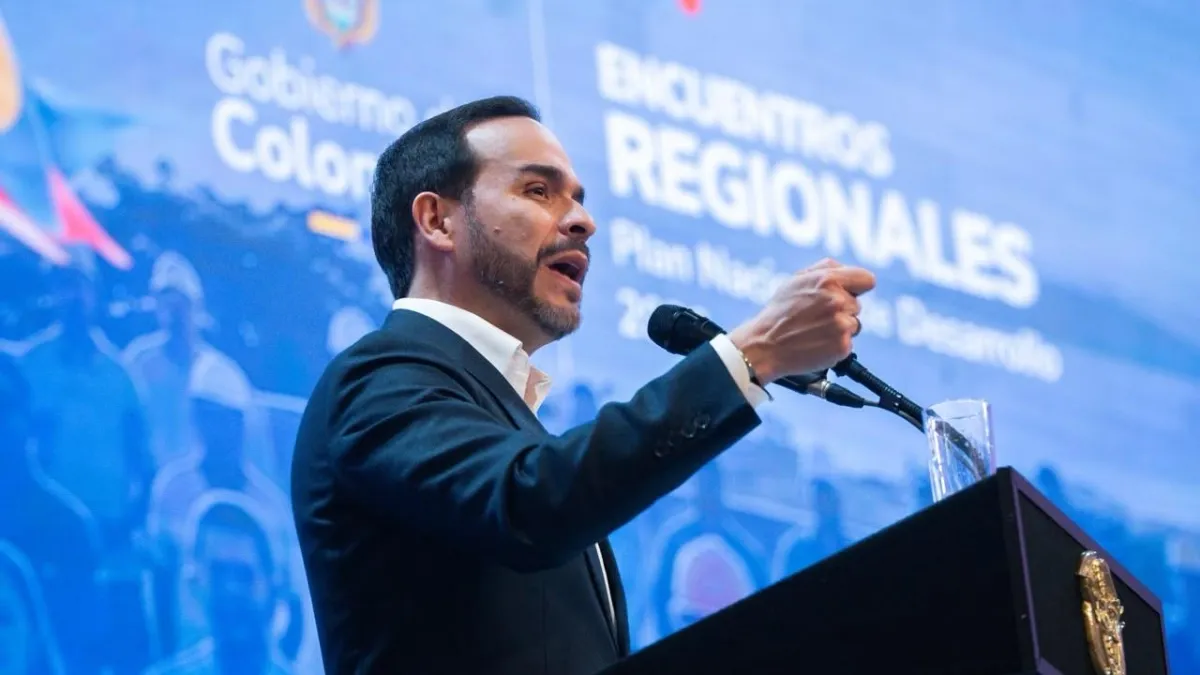
BOGOTÁ, COLOMBIA — In the wake of a sweeping security sweep that has fundamentally disrupted local criminal dynamics, President Abelardo De La Espriella has issued a forceful call for the selective militarization of critical zones in the nation’s capital. Speaking during an emergency high-level security council convened on Wednesday, October 28, the head of state emphasized that securing Bogotá’s periphery is no longer a matter of routine law enforcement, but a vital national security imperative to block the territorial expansion of heavily armed criminal networks.
The presidential pronouncement follows the execution of "Operation Kratos," a massive, highly coordinated law enforcement and military offensive launched early Wednesday morning. According to preliminary reports from the executive branch, the operation dealt an unprecedented blow to criminal syndicates operating within the metropolitan area. Describing the sweeping raids and strategic interventions as something "never seen before in Bogotá," the administration signaled a decisive shift toward uncompromising state authority in the urban centers.
However, even as intelligence agencies process the tactical successes of Operation Kratos, the administration warns that neutralizing cells within the city is insufficient if critical rural-urban corridors remain vulnerable to infiltration. Consequently, the government has set its sights on securing Bogotá’s strategic geographic flanks, chief among them the localities of Usme and the sprawling mountainous expanse of the Sumapaz paramo.
1. Main Facts: Operation Kratos and the Presidential Strategy
The centerpiece of Wednesday’s developments was the rollout of Operation Kratos, a multi-agency security initiative designed to dismantle high-impact criminal organizations that have increasingly threatened public safety in Bogotá. While full operational details remain classified or are trickling out as raids conclude, the operation has already been hailed by the executive branch as a watershed moment in the city’s contemporary security history.
During the subsequent security council—a closed-door session bringing together military commanders, police leadership, and local authorities—President De La Espriella addressed the urgent need to translate the tactical gains of Operation Kratos into permanent strategic defense.
The core elements of the president’s directive include:
- Targeted Militarization: Deploying specialized military units to high-risk zones to hold territory reclaimed from criminal groups.
- Corridor Containment: Establishing an unyielding military presence along the geographic pathways connecting rural strongholds to the urban grid.
- Inter-Institutional Synergy: Praising the unprecedented level of articulation and joint effort between local authorities and the central government during Operation Kratos, while demanding that this cooperation be institutionalized for the long term.
"Hay que contener, hay que tener el control militar en el Sumapaz y en el corredor de Usme y Sumapaz para contener la expansión de esas redes, pero como les digo, todos sabemos cuáles son los problemas de Bogotá," ("We must contain, we must maintain military control in Sumapaz and the Usme-Sumapaz corridor to contain the expansion of these networks, but as I tell you, we all know what Bogotá’s problems are,") President De La Espriella declared during his address.
2. Chronology of Events: Wednesday, October 28
The sequence of events on Wednesday unfolded rapidly, shifting from high-stakes tactical maneuvers in the early dawn hours to high-level political strategy by afternoon:
- 04:00 AM – 06:00 AM: Security forces launch Operation Kratos across designated sectors of Bogotá. Utilizing surprise tactical maneuvers, intelligence-led raids, and heavy police-military saturation, forces move in on high-value targets linked to organized crime syndicates.
- 08:00 AM – 10:00 AM: Initial tactical objectives of Operation Kratos are secured. Reports begin to filter into the Ministry of Defense regarding structural seizures, arrests, and the disruption of logistical chains used by illicit groups.
- 11:30 AM: President Abelardo De La Espriella convenes an extraordinary security council in Bogotá, bringing together the top brass of the Armed Forces, National Police, and municipal leadership to evaluate the morning’s results.
- 02:00 PM: During the post-council briefing, the president delivers his official address, praising the unprecedented nature of Operation Kratos but immediately pivoting to the necessity of permanent militarization in key geographic sectors, specifically highlighting Usme and Sumapaz.
- Late Afternoon: Security forces begin drafting operational frameworks for the proposed militarized corridors, as civil society and political analysts begin debating the implications of increased military footprint in the capital’s southern peripheries.
3. Supporting Data and Geographic Vulnerabilities
To understand why the administration is pushing for the militarization of specific zones, one must examine the unique geography of Bogotá’s southern frontier.
The Usme-Sumapaz Corridor
Bogotá is not merely a dense concrete jungle; it is bordered to the south by the Sumapaz Páramo, the largest páramo ecosystem in the world. Spanning massive high-altitude territories, Sumapaz has historically served as a strategic geographic bridge connecting the eastern plains (Los Llanos Orientales) and the central Andean region.
- Geographic Isolation: The vastness and rugged terrain of Sumapaz make traditional policing methods virtually impossible. Large swathes of the locality are sparsely populated, featuring dense forests, steep mountains, and hidden trails.
- Historical Transit Route: For decades, illegal armed groups—including dissident guerrilla factions and organized drug-trafficking cartels—have utilized the Sumapaz-Usme corridor as a stealthy transit route to move weapons, narcotics, and personnel toward the capital region without encountering major military checkpoints.
- Urban Encroachment: Usme represents the fragile boundary where this rugged rural expanse bleeds into rapidly expanding informal urban settlements. Criminal networks frequently exploit this interface, using the rural heights as a safe haven after committing illicit acts within the city, and leveraging the urban slums for extortion, micro-trafficking, and safe houses.
By demanding absolute military control over this specific corridor, the executive branch aims to sever the umbilical cord connecting rural insurgent and criminal structures with urban distribution cells.
4. Official Responses and Institutional Reactions
The president’s call for militarization has sparked a wave of reactions across the political and institutional spectrum, highlighting the delicate balance between ensuring public safety and maintaining civil liberties in an urban metropolis.
The Executive and Military Alignment
The central government’s stance is clear: conventional law enforcement tools are no longer sufficient to combat transnational and heavily armed criminal syndicates that operate with military-grade precision. By framing Operation Kratos as a milestone and demanding the militarization of Sumapaz, the administration is signaling a muscular security doctrine. Military commanders present at the security council have expressed full readiness to deploy specialized mountain warfare and territorial control battalions to the southern corridors, ensuring that the armed forces maintain a persistent, formidable posture rather than temporary, reactive deployments.
Local Authorities and Municipal Coordination
While local authorities in Bogotá have historically guarded their jurisdiction against heavy-handed central government interventions, the severity of recent security challenges has forced a paradigm shift. The unprecedented synergy praised by President De La Espriella reflects a growing consensus that the capital’s security cannot be decoupled from regional and national dynamics. Local leaders have acknowledged that urban crime is increasingly fueled by macro-criminal structures that require national military intervention to fully dismantle.
Civil Society and Public Debate
The announcement has naturally reignited national debates regarding the militarization of urban and semi-rural spaces in Colombia—a topic further amplified by concurrent discussions regarding foreign military cooperation and defense strategies across the country (such as ongoing debates on international military exercises and security partnerships).
While a large segment of the citizenry, fatigued by rising crime, extortion, and insecurity, has welcomed the decisive posture of Operation Kratos, human rights organizations and local community leaders have urged caution. They emphasize that any increased military presence in areas like Usme and Sumapaz must be accompanied by robust social investment, institutional presence, and strict adherence to human rights standards to ensure that civilian populations are protected rather than alienated.
5. Broader Implications for Bogotá and National Security
The implementation of President De La Espriella’s directives following Operation Kratos carries profound implications for the future of security governance in Colombia:
- Redefining Urban Security Doctrines: Bogotá is traditionally viewed as a civilian-administered metropolis managed primarily by the National Police and municipal security secretariats. The normalization of targeted military interventions and permanent territorial control in peripheral zones marks a significant evolution toward a hybrid security model, where the Armed Forces play a direct, hands-on role in metropolitan defense.
- Choking Criminal Logistics: If the military successfully secures the Usme-Sumapaz corridor, urban gangs operating in Bogotá will find themselves increasingly starved of illicit resources, weapon resupplies, and safe logistical rear-guards. This could trigger a localized fragmentation of criminal structures, requiring sustained intelligence-led follow-up operations.
- Political Capital and Public Expectations: By staking his administration’s credibility on sweeping security successes like Operation Kratos and demanding aggressive follow-up measures, President De La Espriella has raised the stakes. The public will closely monitor whether these security announcements translate into a tangible, long-term reduction in crime, extortion, and the fear that has plagued certain neighborhoods.
As developments unfold, all eyes remain on the southern hills of Bogotá. With military planners finalizing the deployment logistics for the Sumapaz and Usme sectors, Colombia is witnessing a critical test of strength between the unyielding advance of state authority and the adaptive survival mechanisms of modern organized crime.