BOGOTÁ — In a surprising turn of events that reshapes the landscape of state contracting and international cooperation, Thomas Greg & Sons is set to resume the production of travel documents for Colombian citizens. This development comes after the previous administration of Gustavo Petro stripped the company of the lucrative passport business to pursue a public-private partnership model tied to foreign entities.
The Ministry of Foreign Affairs officially declared a state of manifest urgency (urgencia manifiesta) through Resolution 12973, dated September 17, 2026. Under this legal framework, a contract worth 240,352 million Colombian pesos has been awarded to the Temporary Union Documentos de Viaje 2027, ensuring operations will run until December 17, 2027.
Main Facts
The core of this administrative maneuver centers on the return of Thomas Greg & Sons—operating in partnership with Thales DIS Colombia S.A.—to handle the supply, personalization, custody, and distribution of Colombian passports.
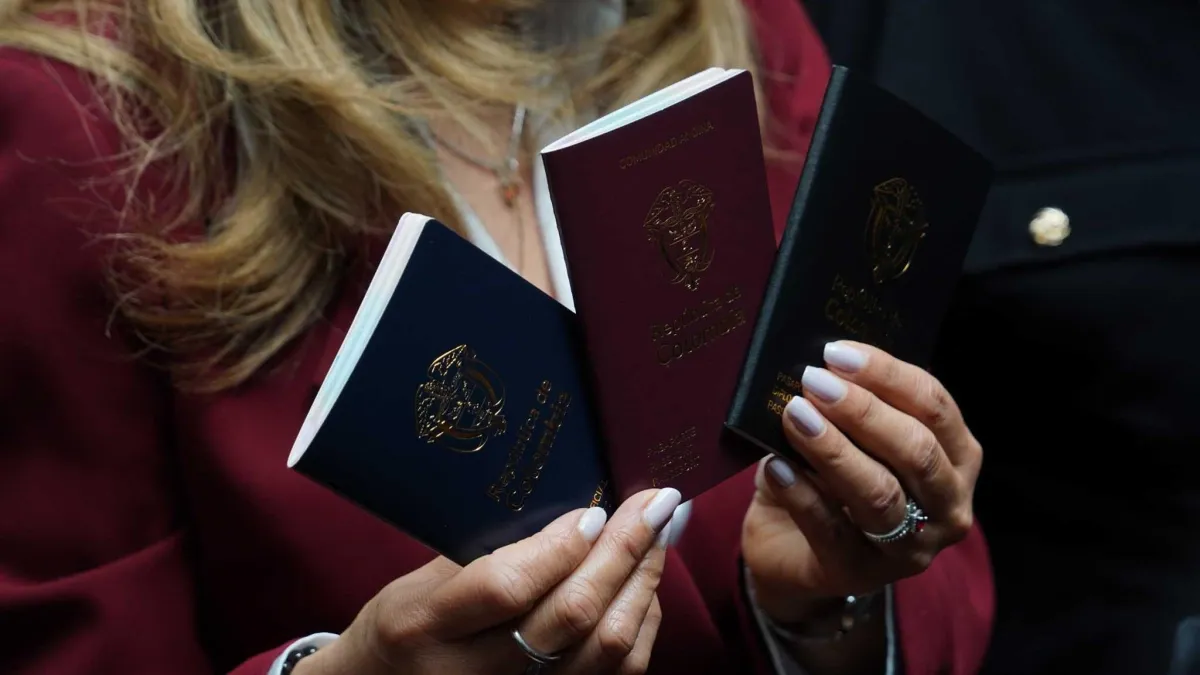
Foreign Minister Omar Bula formally announced the decision from the Casa de Nariño, emphasizing the temporary nature of the agreement.
"We have subscribed to a temporary 15-month contract that ensures the issuance of passports under conditions of security, efficiency, and reliability. I want to be very precise on this point: this is a temporary solution. It is clear that our responsibility as a government toward Colombians is permanent," Bula stated.
The emergency measure bypasses traditional, prolonged bidding processes to avert an imminent administrative crisis. According to official disclosures, the current national inventory of passport booklets is projected to be entirely depleted by November 2026. Bringing in an alternative operator from scratch—one requiring plant certification and the registration of a new security design with the International Civil Aviation Organization (ICAO)—would normally take several months, leaving millions of citizens stranded without travel credentials.

Furthermore, the government defended the financial terms of the new agreement, noting that the proposal submitted by the Temporary Union maintains the exact unit values of previous terms without adjustments for inflation or currency exchange rates. "There is not a single item with an increase, and the fees paid by the citizen remain unchanged," the Foreign Ministry asserted in an official statement.
Chronology of the Passport Crisis
To fully understand how Colombia arrived at this juncture, it is essential to trace the timeline of legal battles, international partnerships, and shifting governmental administrations:
- The Petro Administration (2023–2024): The previous government dismantled the traditional contracting model long held by Thomas Greg & Sons, sparking intense public debate, lawsuits, and multi-million-dollar legal claims against the Colombian state. The administration sought to implement a public scheme in collaboration with foreign governments, specifically leveraging a partnership with Portugal.
- Early 2026: The transition model materialized, linking the National Printing Office (Imprenta Nacional) and the Foreign Ministry’s Revolving Fund with technical assistance from the Casa da Moeda of Portugal and the French state-owned enterprise IN Groupe. Under this arrangement, the Portuguese entity produced the blank booklets starting in April 2026, while the Colombian Printing Office managed personalization, custody, and delivery.
- September 17, 2026: Amid mounting legal scrutiny, the Foreign Ministry issued Resolution 12973, declaring a state of manifest urgency to address looming supply shortages.
- September 22, 2026: Moving swiftly under the administration of Abelardo De La Espriella, the government sent a formal quotation request to Thomas Greg & Sons for the comprehensive management of the nation’s travel documents.
- October 14, 2026: The government received the formal proposal from the Temporary Union formed by Thomas Greg & Sons and Thales DIS Colombia S.A., which was subsequently approved pending the authorization of future budgetary appropriations (vigencias futuras).
- Late October 2026: Foreign Minister Omar Bula officially unveiled the 15-month contract, sparking a fresh wave of legal and political debates regarding the durability and transparency of state contracting.
Supporting Data and Technical Challenges
The operational hurdles facing Colombia’s passport system are deeply technical and logistically complex. The administration’s decision to revert to Thomas Greg & Sons was heavily influenced by three distinct structural pressures:

- Inventory Exhaustion: Projections confirmed that existing blank passport booklets would run out completely by November 2026, creating a severe bottleneck for citizens needing to travel for business, education, or medical emergencies.
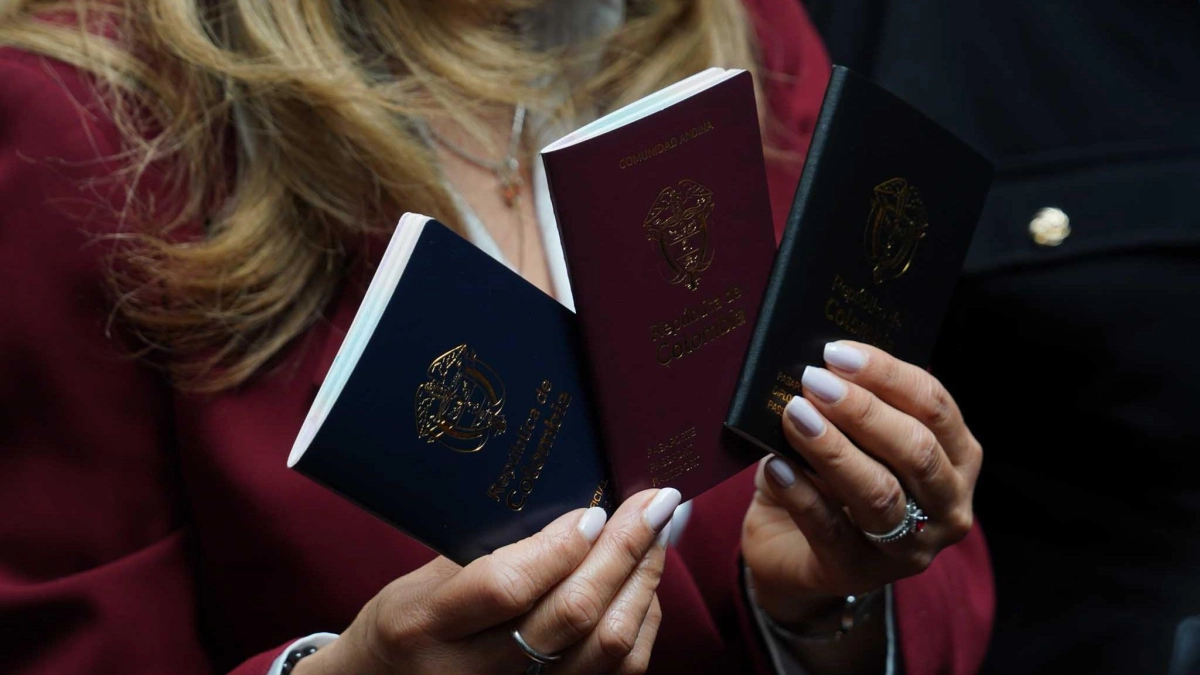
- The Multi-Design Dilemma: At the time of the announcement, two distinct designs of the Colombian passport were already in circulation, both legally valid. Introducing a third transient design through an unverified new provider would have forced international migration authorities across the globe to authenticate three separate security formats issued by Colombia, exponentially increasing the risk of friction at foreign borders.
- International Standards (ICAO): Compliance with the International Civil Aviation Organization requires rigorous testing, physical plant certification, and global database integration. Bypassing these steps through an unvetted provider could jeopardize the global acceptance of Colombian travel documents.
Despite these justifications, the financial scale of the contract—valued at more than 240 billion pesos—has drawn immediate scrutiny from financial analysts and oversight bodies who are monitoring how public funds are allocated during transitional administrative phases.
Official Responses and Justifications
The government has adopted a two-pronged communicative strategy: emphasizing administrative necessity while defending the legality of the emergency decree.
- The Foreign Ministry’s Stance: The Ministry anchored its defense in the fifth ordinal of a prior ruling issued by the Administrative Tribunal of Cundinamarca. This judicial provision explicitly ordered state entities to adopt and execute all necessary administrative and contractual measures to guarantee the uninterrupted provision of public services. By framing the contract as compliance with a judicial mandate to prevent a public service collapse, the administration sought to insulate the decision from immediate political fallout.
- The Administrative Tribunal’s Role: The crisis that triggered this emergency response originated when the Tribunal Administrativo de Cundinamarca provisionally suspended the partnership agreements between the National Printing Office, the Foreign Ministry’s Revolving Fund, and Portugal’s Casa da Moeda. Although the Printing Office and its Portuguese partners submitted a detailed joint report proving the successful completion of the model’s first implementation phase, the current Foreign Ministry ultimately dismissed these findings as insufficient to avert the immediate stock depletion.
Implications and Future Outlook
While the 15-month contract with Thomas Greg & Sons provides a temporary safety net, it has simultaneously opened the door to an intense legal and political battle.

Potential Legal Challenges
Legal experts and specialized sources consulted by journalists indicate that a fierce judicial tug-of-war is on the horizon. Critics of the manifest urgency decree argue that the legal justification is weak. Their argument rests on the fact that a valid 10-year contract with Portugal’s Casa da Moeda remains technically in place, and the Tribunal of Cundinamarca’s precautionary measure did not explicitly order the total termination of that international agreement—an agreement that has already seen substantial physical and financial investments poured into the National Printing Office.
Consequently, control bodies such as the Procuraduría General de la Nación and the Contraloría General de la República are expected to review the government’s legal arguments, the mechanics of the urgency declaration, and the transparency of the direct contracting process.
The Parallel Bidding Process
Crucially, the Foreign Ministry has maintained that the declaration of manifest urgency does not suspend the ongoing ordinary public bidding process that was announced a month prior. The emergency contract with Thomas Greg & Sons is designed strictly as a bridge. It will remain in legal effect either until the Tribunal of Cundinamarca lifts its precautionary measures against the Portuguese-backed model, or until a new permanent contractor is formally selected and operationalized through the standard public tender.

Clause Third Constraints
Adding a layer of administrative rigidity, Clause Third of the urgency contract (Contract No. 959-2026) stipulates that any future extension is strictly contingent upon the continued existence of the specific emergency circumstances that triggered it. Furthermore, the contracting parties retain the legal right to suspend the agreement in the event of proven force majeure.
As Colombia navigates this high-stakes administrative crossroads, the millions of citizens relying on seamless international mobility await the resolution of a dispute where state sovereignty, international diplomacy, and corporate contracting power continuously collide.
This article is based on verified reports and official statements issued by the Colombian Ministry of Foreign Affairs, judicial rulings from the Administrative Tribunal of Cundinamarca, and investigative insights into state procurement.