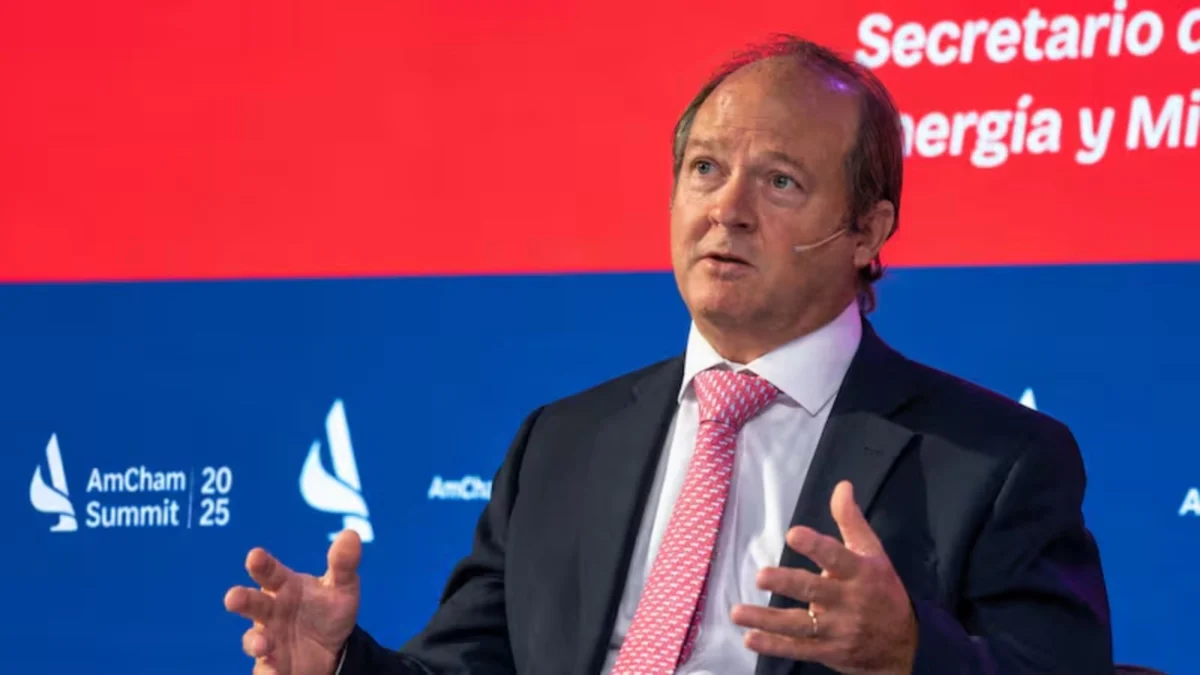
BUENOS AIRES — In a sudden political and economic development that has sent ripples through international financial markets and local boardrooms alike, Argentina’s top energy official has announced his resignation. The departure of Daniel González, who spearheaded President Javier Milei’s flagship economic initiative to unlock the country’s vast non-conventional shale reserves, threatens to disrupt a critical engine of growth just as foreign capital begins pouring into the Patagonia region.
González, a former investment banker with Merrill Lynch and former CEO of state-controlled oil giant YPF SA, was widely regarded by energy executives as a pragmatic, highly competent technocrat. His exit introduces profound uncertainty into the administration’s ambitious agenda, casting a shadow over tens of billions of dollars in pending energy projects ahead of next year’s midterm and presidential cycles.
Main Facts: The Exit of a Key Technocrat
Daniel González formally announced his resignation late Thursday during an appearance on a pro-Milei podcast, citing personal timing while acknowledging the heavy workload that had previously delayed his departure.
The crux of the crisis centers on the Régimen de Incentivo para Grandes Inversiones (RIGI)—the RIGI program—which serves as President Milei’s premier vehicle for attracting foreign direct investment. González was personally tasked with managing and accelerating this framework, which has recently been inundated with requests totaling tens of billions of dollars.
Key elements defining this breaking news include:
- The Leadership Vacuum: González was a vital interlocutor for multinational oil and gas corporations. His departure removes a trusted industry insider who successfully bridged the gap between aggressive libertarian macroeconomic policies and the operational realities of heavy industry.
- The RIGI Program at Risk: The initiative grants massive tax, currency, and customs incentives guaranteed for 30 years, alongside provisions for international arbitration over local courts. Around US$70 billion is slated specifically for oil and gas wells in Vaca Muerta.
- The Vaca Muerta Boom: The Patagonian shale basin remains one of the few shining pillars in an otherwise fragile domestic economy. Delays in bureaucratic approvals threaten to stall this critical momentum.
- Team Continuity vs. Institutional Loss: While González insisted that his technical team remains intact ("The only one leaving is me"), analysts warn that losing the political weight and sector expertise of the head of the committee will inevitably cause friction and delays.
Chronology: How the Crisis Unfolded
To understand the weight of González’s resignation, it is necessary to trace the timeline of his tenure, the expansion of the RIGI program, and the sequence of events leading to his departure.
Early 2024–Mid 2024: Structuring the Libertarian Energy Vision
Following Javier Milei’s sweeping electoral victory, the administration moved aggressively to dismantle decades of state intervention in the energy sector. Daniel González was brought into government to assist in cutting costly energy subsidies and realigning domestic utility and fuel prices closer to international market values. As an alumnus of Merrill Lynch and former CEO of YPF, González enjoyed immediate credibility with Wall Street and Houston-based executives alike.
Mid 2024–Early 2025: The Launch and Expansion of the RIGI
The RIGI framework was designed to provide ironclad legal and financial security to mega-investments. Initially cast broadly, the program was expanded earlier this year to explicitly cover upstream oil and gas development in Vaca Muerta. This expansion acted as a catalyst, opening the floodgates to an unprecedented wave of capital commitments from international energy majors and domestic players.
Thursday, Late October 2025: The Podcast Announcement
Appearing on a political podcast sympathetic to the Milei administration, González dropped the bombshell. He revealed that he had intended to step down earlier but felt obligated to stay due to the crushing wave of investment applications.
"With the RIGI projects, we were a bit behind and had to accelerate," González stated. "A massive number of projects were entering, and we wanted to avoid a snowball effect."
He also hinted at internal friction, noting a personal "feeling of abandonment, of betrayal, by one [person or faction]"—a remark that has fueled intense speculation within Buenos Aires political circles regarding internal power struggles within the libertarian administration.
Supporting Data: Vaca Muerta, the RIGI, and the Numbers
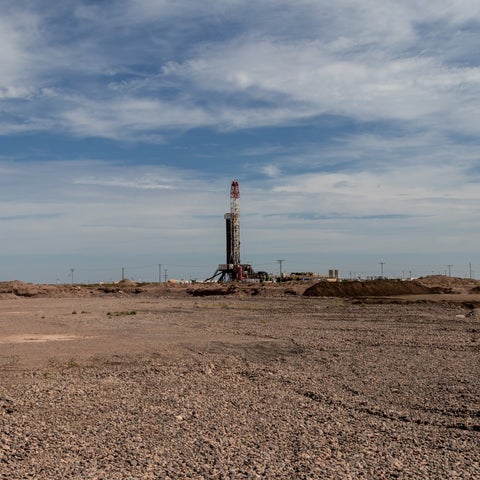
Argentina sits atop the world’s second-largest shale gas reserve and its fourth-largest shale oil reserve, primarily concentrated in the Vaca Muerta formation in Neuquén and neighboring provinces. Transforming these resources into export revenue is central to Milei’s strategy of achieving macroeconomic stability and building foreign currency reserves.
The RIGI Financial Scope
- Capital Inflow: The RIGI program has accumulated applications valued at tens of billions of dollars.
- The Oil Allocation: Out of the total pool, approximately US$70 billion is earmarked specifically for drilling, extraction infrastructure, and midstream logistics in the Patagonian shale fields.
- The 30-Year Guarantee: To mitigate Argentina’s historical reputation for sovereign defaults and policy volatility, the RIGI guarantees stable tax and regulatory conditions for three decades. It also permits foreign investors to bypass local Argentine courts entirely, granting them direct access to international arbitration tribunals in the event of contractual breaches by the state.
Economic Context
Argentina’s broader economy continues to navigate a painful adjustment period under Milei’s austerity measures. While inflation has cooled from its hyperinflationary peaks and fiscal accounts have moved into surplus, domestic consumption remains suppressed. Consequently, the energy sector—and Vaca Muerta in particular—functions as the primary economic locomotive capable of generating rapid, large-scale dollar inflows.
Official Responses and Industry Reactions
The news of González’s departure has generated a chorus of concern from energy market analysts, independent consultants, and congressional allies, juxtaposed against the administration’s attempts to project stability.
Energy Analysts Warn of Bottlenecks
Juan José Carbajales, director of the Buenos Aires-based energy consultancy Paspartu, underscored the administrative nightmare that could follow González’s exit.
"With the expansion of the RIGI to include Vaca Muerta wells earlier this year, applications have increased enormously and will continue to do so in the coming months," Carbajales noted. "These are complex applications that take time to analyze, and now if you behead the evaluation committee, all of that can suffer delays."
Nicolas Gadano, a senior energy expert at the Buenos Aires consultancy Empiria, echoed these sentiments, emphasizing González’s irreplaceable institutional memory.
"It is an important loss," said Gadano. "He was a person who knew the sector very well, who knew YPF very well. Oil and gas companies are going to feel his absence broadly."
Political Fallout in Congress
Even within the fractured Argentine legislature, lawmakers recognized González’s stabilizing presence. Eduardo Falcone, a national deputy belonging to a small bloc allied with Milei, took to social media platform X to voice his dismay over the resignation.
"Noble obligation compels me to note that they were slow with the RIGI approvals, and we must recognize that after [González intervened], things were moving faster," Falcone wrote. "This is going to complicate everything."
Implications: What González’s Exit Means for Milei’s Agenda
The departure of Daniel González carries significant strategic risks for the Milei administration as it looks toward the crucial 2026 midterm elections and the broader campaign for a presidential second term.
1. Investor Confidence and Political Risk
The core selling point of the RIGI is its immunity to Argentina’s traditional political pendulum swings. However, foreign investors are inherently sensitive to executive branch stability. The departure of a trusted market-friendly interlocutor raises questions about whether the evaluation committee will maintain its current efficiency or succumb to bureaucratic paralysis. Furthermore, investors remain quietly anxious that a future, less business-friendly government could find legal or political pretexts to challenge pending RIGI applications.
2. Operational Momentum in Vaca Muerta
Turning paper commitments into steel in the ground requires seamless coordination between federal agencies, provincial governments (who legally own the subsoil hydrocarbons), and private operators. Any slowdown in RIGI approvals directly impacts midstream projects—such as oil pipelines and liquefied natural gas (LNG) export terminals—that are urgently needed to move Patagonian production to global markets.
3. The Test of Institutional Resilience
President Milei’s administration has frequently relied on strong personalities to drive reforms through a skeptical bureaucracy. González’s assurance that his technical team remains intact will be put to an immediate test. If the administration fails to name an equally respected replacement quickly, the "snowball effect" of delayed applications that González sought to prevent could rapidly materialize, dampening Argentina’s primary growth engine at its most delicate hour.