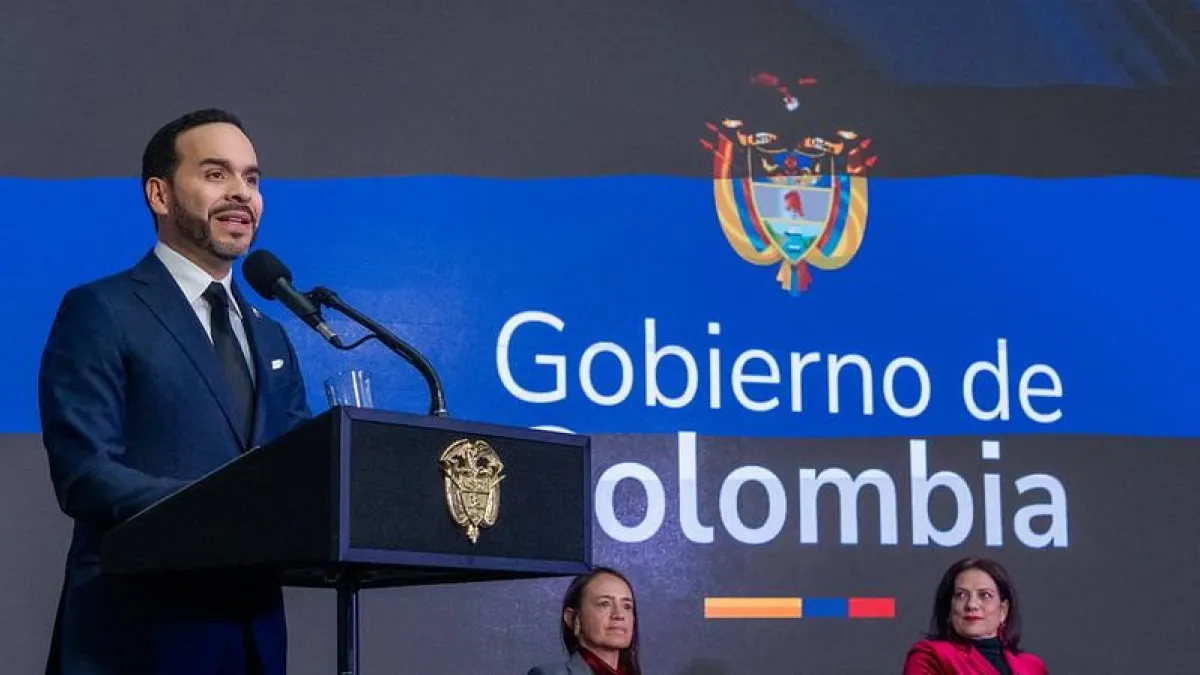
BOGOTÁ — In a definitive shift toward fiscal discipline, the administration of President Abelardo De La Espriella announced a sweeping package of budget cuts exceeding 267,000 million pesos on October 31, 2026. Spearheaded by Presidential Spokesperson Miller Soto, the aggressive austerity measures aim to dismantle what the government has termed a long-standing culture of bureaucratic excess and institutional waste within the corridors of power in Colombia.
The announcement, broadcast initially via official channels on the social media platform X, details a targeted reduction of approximately 192,000 million pesos coming directly from the internal operating and investment budgets of the Presidency of the Republic. Beyond the executive office, the government’s fiscal overhaul extends its reach across multiple key administrative agencies, signaling a profound re-evaluation of how public funds are managed, contracted, and distributed across the national government.
The administration’s policy pivots on the core premise that state efficiency should be prioritized over administrative bloat. By trimming unnecessary expenditures, the De La Espriella administration aims to redirect public wealth toward critical social sectors, including national security, elder care, and regional development initiatives.
Main Facts: The Anatomy of the 2026 Fiscal Overhaul
The cornerstone of the newly announced policy is a massive reduction in state spending, designed to shrink the size and financial footprint of the executive branch. According to official figures released by the administration, the total budget adjustments surpass 267,000 million pesos.
Key metrics defining the scope of these measures include:
- Total Budget Reduction: Over 267,000 million pesos slashed from operational and discretionary investment funds.
- Presidential Cuts: Approximately 192,000 million pesos cut directly from the internal budget of the Presidency of the Republic.
- Personnel Optimization: Out of 1,018 officially established positions within the presidential administrative plant, only 586 are currently occupied, resulting in an operational staff capacity of just 58%.
- Contract Terminations: Immediate cancellation of 32 service provision contracts, collectively valued at over 2,200 million pesos.
- Targeted Entities: Rigorous spending reviews implemented across several decentralized and adscribed agencies, including the Territorial Renewal Agency (ART), the Agency for Reincorporation and Normalization (ARN), the National Disaster Risk Management Unit (UNGRD), the Presidential Agency for International Cooperation (APC Colombia), and the Virgilio Barco National Real Estate Agency.
The administration has framed these actions as a moral imperative. By targeting internal expenses first, the government seeks to lead by example in its crusade against bureaucratic waste.
Chronology of Events: From Directives to Execution
The path toward this monumental restructuring began with President Abelardo De La Espriella taking office with a mandate centered on strict fiscal management and governmental efficiency. The unfolding of the October 31 announcement highlights a methodical approach to implementing these reforms:
1. Pre-Implementation Review and Auditing (Early to Mid-2026)
Upon assuming office, the administration initiated a silent audit of public spending, examining institutional payrolls, discretionary funds, and active service contracts across various ministries and adscribed agencies. The findings revealed systemic over-staffing on paper contrasted with high operational efficiency achieved by lean teams.

2. Presidential Directives on Austerity (October 2026)
President De La Espriella issued strict internal memorandums instructing all heads of departments to review their operational costs and eliminate superfluous expenditures. The guiding philosophy was established: the burden of economic sacrifice must not fall solely on taxpayers while administrative apparatuses remain bloated.
3. Official Announcement via Social Media (October 31, 2026)
At approximately 3:00 PM, the official channels of the Presidency published a formal breakdown of the austerity measures, accompanied by a public statement detailing the scope of the 267,000 million peso reduction.
4. Press Briefing and Elaboration by Spokesperson Miller Soto (October 31, 2026)
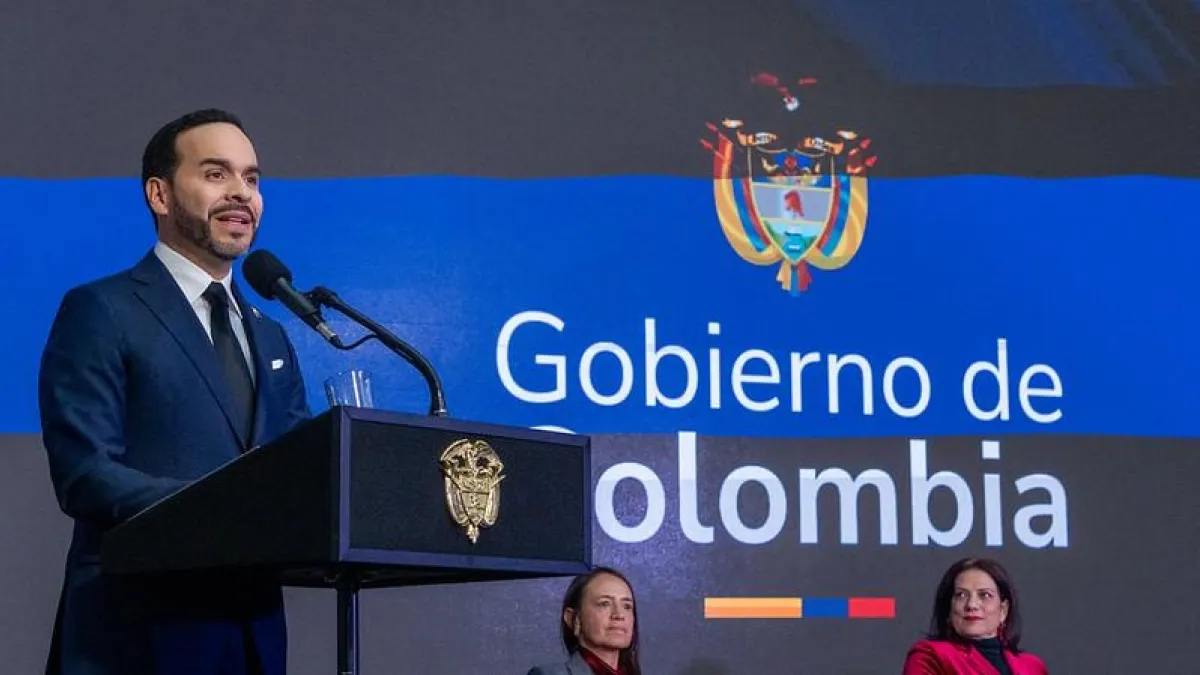
Later that afternoon, Presidential Spokesperson Miller Soto held a comprehensive briefing. He contextualized the budget cuts, revealed the specific figures regarding the Casa de Nariño’s human resources, and announced the immediate termination of the 32 service contracts, cementing the transition from planning to direct executive action.
Supporting Data: Operational Efficiency and Bureaucratic Realities
To justify the steep financial cutbacks, the administration presented a detailed look into the operational realities of the Casa de Nariño. Spokesperson Miller Soto emphasized that the state does not require a massive army of bureaucrats to function efficiently; rather, modern governance relies on targeted talent and unwavering dedication.

The 58% Staffing Reality
Official figures indicate that the institutional framework of the Presidency authorizes 1,018 distinct positions. However, the administration currently operates with only 586 active personnel, maintaining an occupancy rate of 58%.
Soto lauded this lean operational model, noting that the reduced workforce has managed the affairs of the executive branch "at full throttle and with total efficiency." This statistic serves as the intellectual backbone for the administration’s argument that administrative downsizing is entirely feasible without compromising governmental output.
The Dissection of Service Contracts
Beyond permanent structural positions, the administration turned its attention to external advisory and service provision contracts—a sector historically criticized for hiding political patronage and redundant expenditures. By immediately terminating 32 such contracts, the government reclaimed over 2,200 million pesos in public funds.
These measures demonstrate a deliberate effort to sever ties with inefficient outlays, ensuring that taxpayer contributions are channeled exclusively into initiatives that yield tangible public benefits.

Official Responses: "The Adjustment Must Begin in Our Own House"
The rhetoric accompanying the rollout of the austerity package was defined by a strong populist and anti-establishment tone, targeting historical practices of government extravagance.
Addressing the press, Spokesperson Miller Soto did not mince words regarding past administrations:
"For years, we got used to a very painful irony. Governments would ask citizens to tighten their belts, to make sacrifices, and to pay their taxes with sweat, while in the hallways of power, extravagance, waste, and unnecessary bureaucracy abounded."
Soto reinforced that President De La Espriella’s principal mandate was to reverse this dynamic by ensuring that fiscal restraint begins at the highest levels of government.

"The directive he has given us is very simple: the adjustment of the State and the sacred respect for the resources of taxpayers must begin in our own house," Soto declared.
Echoing these sentiments, the official presidential statement posted on X emphasized the administration’s philosophical alignment with fiscal conservatism:
"The State demonstrates that it does not need a bureaucratic army to function, but rather talent and commitment. Each peso saved from superfluous spending translates into free resources for security, the well-being of the elderly, and the care of the most needy regions."
Broader Implications: Where Will the Savings Go?
While the immediate impact of the announcement is focused on structural shrinkage and cost-cutting, the ultimate political and economic test of the De La Espriella administration will lie in the reallocation of these saved resources.

Funding Security, Social Welfare, and Regional Recovery
The administration has explicitly tied the 267,000 million peso savings to vital social and security infrastructure needs. Spokesperson Soto highlighted several key areas designated to receive the surplus funds:
- National Security: Bolstering law enforcement and military operational capabilities to combat rising security challenges across urban and rural sectors.
- Elderly Welfare: Expanding social safety nets and financial support programs dedicated to the nation’s aging population.
- Disaster Relief and Reconstruction: Directing emergency funds toward the reconstruction of regions recently impacted by natural disasters, specifically citing zones affected by recent seismic activity.
Challenges and Questions Moving Forward
Despite the enthusiasm surrounding the fiscal overhaul, economic analysts and political opposition figures have pointed out certain gaps in the initial presentation. Notably, the administration has yet to release a granular, line-by-line breakdown of exactly how the 192,000 million pesos in presidential cuts were distributed among specific sub-departments.
Furthermore, while broad categories such as security and disaster relief have been identified as beneficiaries, a concrete timeline and proportional allocation matrix for the redistributed funds have not yet been published. Observers note that maintaining public trust will require absolute transparency as these billions of pesos flow into new budgetary pipelines.
A New Standard for Colombian Public Administration?
If successful, the austerity blueprint executed by President De La Espriella could redefine the standard for public administration in Colombia. By proving that a 58% staffing occupancy rate can sustain the highest office of the land, the administration has set a high benchmark for regional and local governments aiming to trim bureaucratic fat.

As Colombia moves forward into the final months of 2026, all eyes will remain fixed on the Casa de Nariño to see whether this aggressive contraction of the state yields the promised dividends for its citizens, transforming institutional austerity into tangible national progress.