By Jos Guerrero Redacción Alcance Digital Published: October 28, 2026
Main Facts
In an inspiring intersection where modern mechatronics meets human empathy, three university students from Ecuador have engineered an innovative assistive technology designed to bridge communication gaps for children on the autism spectrum. Named Capibot, the device takes the comforting form of a soft, huggable capybara plush toy while housing a sophisticated internal electronic system.
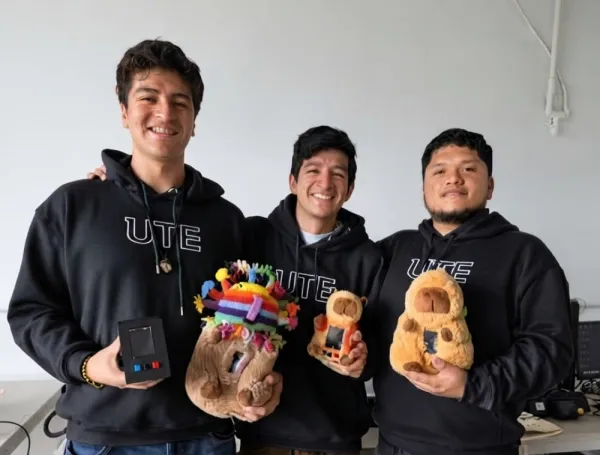
Conceived by Mateo Fabara, Josué Espín, and Israel Robayo—mechatronics engineering students at the Universidad UTE in Quito—Capibot is built to facilitate interaction between children with Autism Spectrum Disorder (ASD) and their clinical therapists. Rather than relying on cold, clinical screens or intimidating machinery, the device blends the tactile reassurance of a plush animal with active digital tools.
Equipped with a micro-controller, wireless connectivity, a charging module, and an integrated display screen, Capibot allows therapists to send targeted visual stimuli to a child during a supervised session. Simultaneously, the system logs the child’s behavioral responses—categorizing them as positive, negative, or neutral—saving this data to a database for ongoing clinical tracking and analysis.
Having already garnered international recognition, the project recently debuted at the prestigious IEEE Smart World Congress 2026 held at the University of Calabria in Italy, where it stood out among more than 400 technological submissions from across the globe.
Chronology of an Innovation
The journey toward Capibot did not begin in a high-tech corporate laboratory or a sterile university workshop; it started serendipitously in a neighborhood park roughly two years ago.
The Spark in the Park
Mateo Fabara was walking his dog when he observed a moment of profound social connection. Nearby, a child diagnosed with autism, who typically struggled with social engagement and interpersonal communication, spontaneously approached the dog. Watching the child react with visible comfort and curiosity toward the animal planted a conceptual seed in Fabara’s mind: How could technology replicate the calming, non-judgmental presence of an animal to assist therapeutic interventions?
Driven by this insight, Fabara teamed up with fellow mechatronics students Josué Espín and Israel Robayo. Under the mentorship of faculty members like Professor Wilson Pavón, the trio began conceptualizing a device that could merge emotional comfort with functional clinical monitoring.
From Concept to Prototype
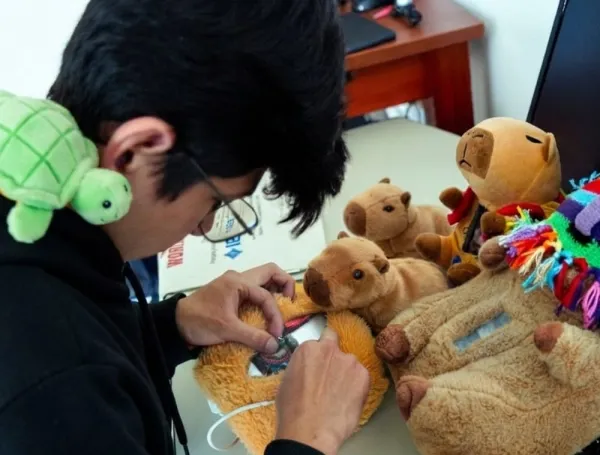
Over the next two years, the team iterated through numerous mechanical and software designs. They prioritized a modular framework, ensuring that the sensitive internal electronics could be safely removed. This feature allows the exterior plush toy to be thoroughly cleaned and sanitized without risking damage to the micro-controllers or display systems—a crucial requirement for any tool utilized in clinical and educational environments.
International Validation in Italy
The culmination of their undergraduate research materialized on the global stage in 2026. Selected from a pool of over 400 global submissions, Capibot was presented at the IEEE Smart World Congress in Italy. There, the young engineers not only showcased their functional prototype to international researchers but also forged valuable academic networks with experts from Spain, Canada, and Russia, setting the stage for future collaborative development.
Supporting Data and Technical Architecture
Capibot’s design reflects a meticulous balance between hardware engineering, software usability, and child-centric ergonomics.
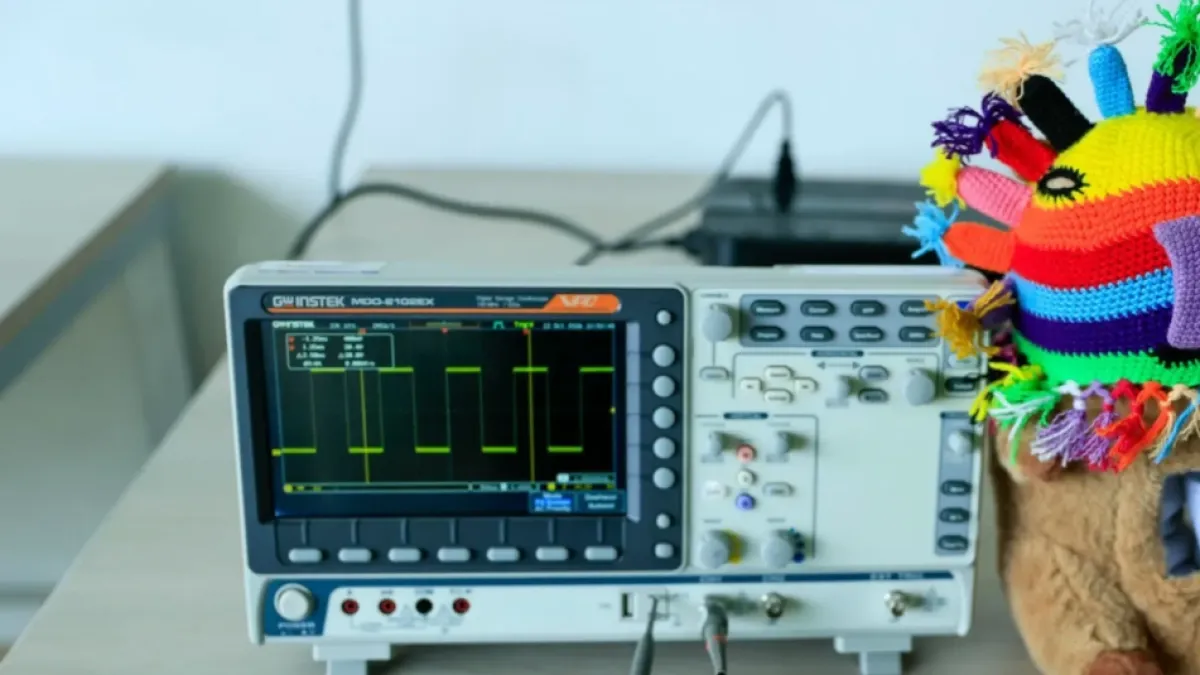
The Core Hardware: Housed within a removable internal chassis, the device features a micro-controller with wireless capabilities, a screen for visual stimulus delivery, power management modules, and efficient battery regulation systems.
The Interface: Capibot links seamlessly to computers, tablets, or smartphones via a specialized application. This software grants the therapist full control over the pace and nature of visual cues presented to the child.
Data Logging: During sessions, therapists can log real-time behavioral metrics via the software interface. Responses are systematically cataloged as positive, negative, or neutral, building a longitudinal profile that helps clinicians adjust their methodologies over time.
Cultural Identity: During its presentation at the IEEE Congress in Italy, Capibot wore a miniature mask of the Diablo Uma—a vibrant traditional figure from the Ecuadorian Andean region associated with the Inti Raymi (Festival of the Sun and Harvest). This artistic choice celebrated indigenous resilience, cosmic energy, and the creators’ national heritage.
Official Responses and Expert Perspectives
While Capibot introduces innovative technical capacities to therapeutic environments, its creators and academic mentors are careful to establish clear boundaries regarding its intended use.
A Bridge, Not a Substitute
Professor Wilson Pavón, an engineering researcher at Universidad UTE, emphasized during interviews with international agencies like EFE that Capibot is strictly a supportive communication conduit.
"The device does not attempt to diagnose, treat, or evaluate," Pavón explained. "Its purpose is to function as a bond and a communication channel during sessions in controlled environments."
Pavón also highlighted the dual utility of the robot’s physical form. Because it is built inside a soft, huggable exterior, it serves as a natural tool for emotional self-regulation.
"Additionally, it can be utilized as a tool for regulation because it is a plush toy, it is huggable," Pavón noted.
Global Competitiveness and Recognition
Reflecting on the project’s journey to Europe, 23-year-old co-creator Josué Espín underscored the uniqueness of their approach. Standing out among 400 projects at the IEEE Congress validated their fusion of computer systems with tangible physical companions. Furthermore, embedding cultural elements like the Diablo Uma mask was a deliberate statement of intent.
"We wanted to be quite representative of our country," Espín remarked regarding the cultural showcase in Italy.
Implications and Future Horizons
The development of Capibot opens compelling avenues for the future of assistive technology, pediatric therapy, and human-robot interaction. However, the team remains grounded, recognizing that moving from a prototype to a widely implemented clinical tool requires rigorous adherence to ethical and scientific standards.
Short-Term and Long-Term Goals
Ethical Protocols and Clinical Trials: Before Capibot can be deployed in active therapeutic practices, it must undergo formal clinical evaluations, safety reviews, and the establishment of strict ethical protocols to protect participating children and their families.
Artificial Intelligence Integration: The student team is currently exploring ways to integrate basic machine learning algorithms into the device. Future iterations could feature semi-autonomous behavioral analysis, allowing the system to detect subtle patterns in interaction and prompt therapists or offer calming suggestions to assist the child’s self-regulation process.
Expanded Sensory Feedback: While the current prototype relies heavily on visual stimuli, ongoing research aims to incorporate tactile vibrations and gentle auditory responses in subsequent versions.
Modular Adaptability: By refining the modular exterior, future versions could allow therapists to swap out the capybara shell for different animals or characters, tailoring the sensory experience to the individual preferences of each child.
Redefining Assistive Technology
Capibot exemplifies how young innovators, working outside major commercial research hubs, can leverage open-source hardware, academic mentorship, and deep empathy to address real-world challenges. By transforming a simple interaction in an Ecuadorian park into an award-winning international prototype, Fabara, Espín, and Robayo have demonstrated that the future of medical technology lies not just in superior processing power, but in warmth, accessibility, and cultural resonance.
This article was produced with the assistance of artificial intelligence, based on publicly available information distributed to media outlets, and was thoroughly reviewed, edited, and expanded by editorial staff.
By José Carlos García R. Multimedia Editor For years, the smart home market has resembled the Wild West. It has been characterized by a disjointed collection of devices for different functions, manufactured by competing brands,…
By Global Security & Technology Desk Updated: September 19, 2026 Main Facts The rapid integration of generative artificial intelligence into global military frameworks has suffered its most alarming near-miss to date. In a classified intelligence…
By José Carlos García R. Multimedia Editor Updated: October 24, 2026 Introduction: The Invisible Fault Line Beneath the Global Network For over a decade, the digital infrastructure of modern society rested upon a foundation that…